
Ceramic Coating Motorcycles
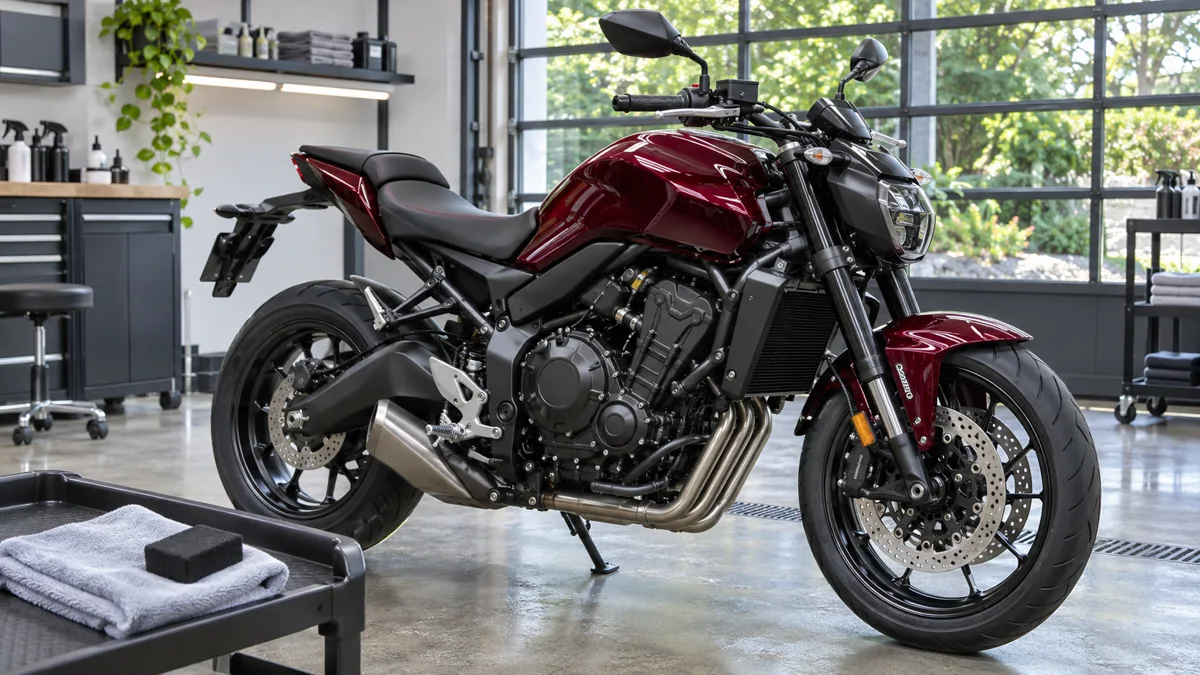
Ceramic coating a motorcycle is worth considering when easier cleaning and maintaining painted bodywork are your priorities. Start with the tank, fairings and fenders, then ask for a separate product decision for every additional finish. Have the installer write down both the included parts and the areas left untreated.
If your main concern is boot, zipper or luggage contact, discuss physical protection for those areas. System X's motorcycle coating guide distinguishes coating's maintenance benefits from PPF's greater impact and abrasion protection. Our ceramic coating versus PPF guide helps frame that choice.
Build a motorcycle coating scope by surface
Comparing a motorcycle manufacturer's care instructions with coating manufacturers' guidance produces three useful boundaries: paint preparation, metal compatibility and operating heat.
| Area | Primary-source example | Decision for your quote |
|---|---|---|
| Matte painted panels | Honda's CB650F manual excludes wax on matte paint | Request finish-specific preparation and a named matte-compatible coating |
| Chrome or polished metal | Gtechniq C5 permits chrome but excludes polished metals | Identify the finish before choosing the product |
| Exhaust components | System X requires approval for the substrate and operating temperature | Obtain approval for the actual part; keep headers out of an unspecified bodywork package |
| Tires and braking surfaces | Honda keeps wax away from tires and brakes and warns against lubricant contamination | Record explicit exclusions and how adjacent work will be controlled |
Sources: Honda CB650F/FA owner's manual, printed page 106, Gtechniq C5 application instructions and System X motorcycle guidance.
This comparison changes how to assess a “whole bike” package. Ask the shop to mark the proposed work on photographs of each side of your motorcycle. A single product name beside the total price leaves the important surface decisions unanswered.
For a mixed finish, separate matte paint, gloss paint, graphics and exposed metal in that marked scope. Confirm whether a shiny metal part is chrome plated, clear-coated or bare polished metal. C5's chrome approval and polished-metal exclusion make that distinction consequential.
Keep brakes, tires and rider contact areas out
Do not apply bodywork coating to brake discs, pads or tires. Ask the installer to explain how these areas will be protected during cleaning, preparation and application. Honda's manual specifically warns that oil-contaminated brakes lose effectiveness and directs owners to keep wax away from brakes and tires.
Leave seats, grips and foot controls outside the bodywork-coating scope. Bring any request to treat those surfaces to the motorcycle manufacturer before adding it to the job. Have the shop review the finished motorcycle with you at collection, including the exclusions marked on your photographs.
Separate wheels from hot exhaust parts
Gtechniq lists C5 for wheels, calipers and exhaust tips, with a 12-hour indoor cure before exposure to the elements. Those instructions give you a concrete storage question for a wheel-coating service: where will the motorcycle stay until that period ends?
For headers, engine cases or a silencer, request the product manufacturer's approval for the exact finish and temperature. System X makes that requirement explicit for motorcycle exhausts. An exhaust-tip listing does not answer the header question. Our exhaust-tip guide also explains the distinction between detailing coatings and specialist thermal coating work.
Compare quotes using the same work list
Send each installer the same photographs and request:
- The panels included, with a coating named for each finish.
- Cleaning and paint correction as separate line items.
- The existing marks expected to remain after preparation.
- Any parts removed for access, who reinstalls them and the procedure used.
- The excluded areas and protection measures around them.
- Collection time, permitted water exposure and first-wash instructions.
- Aftercare products, inspection requirements and future service charges.
Agree on the appearance before application. Photograph scratches and worn tank-contact areas, then discuss repair or protection separately. The installer-selection guide gives you questions for checking a shop's preparation and handover process. When contacting local shops, confirm that they accept motorcycles and the specific work you need.
Choose the package with the clearest surface map and preparation plan. A smaller treatment covering sound painted panels can be a useful purchase when that is where you spend your cleaning time. If the quote leaves material identification or exhaust approval unresolved, settle those items before booking.
Stay Updated with Ceramic Coating News
Get the latest updates on ceramic coating technology, tips, and exclusive offers delivered to your inbox.