
Paint Correction for Ceramic Coating
Compare real preparation scopes before ceramic coating. Separate cleaning, light polishing and correction, then ask an installer what your paint needs.
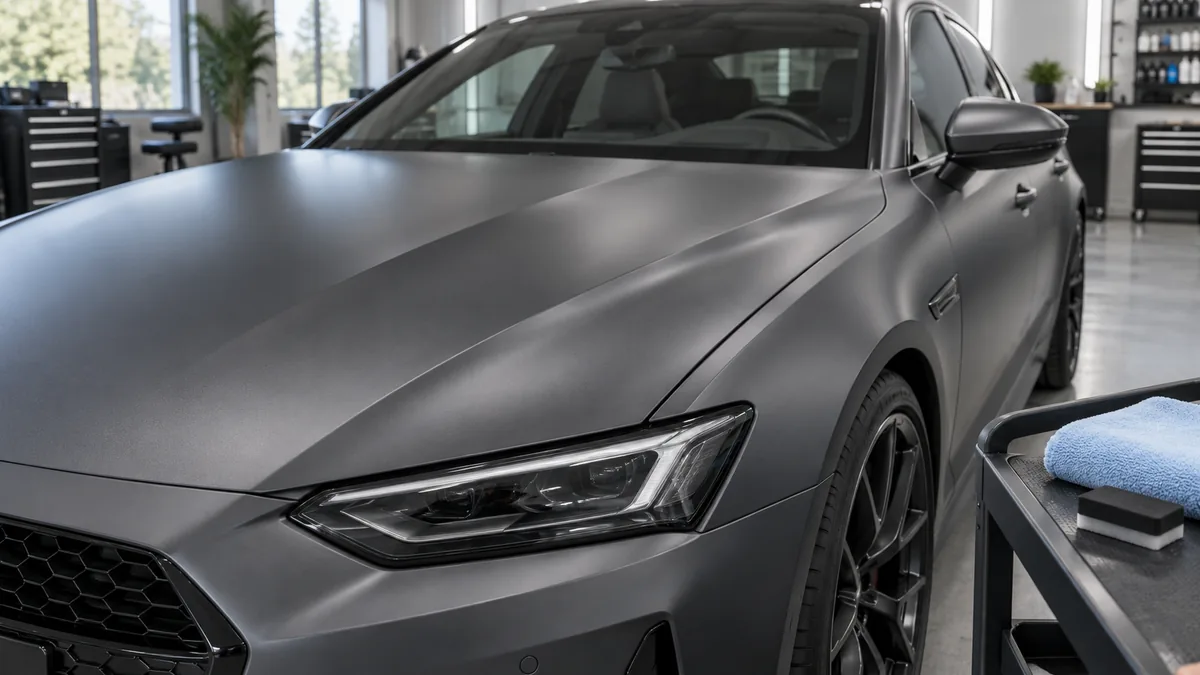
Ceramic coating for matte paint is worth considering when you want a compatible maintenance system that preserves the existing finish. Choose a product explicitly intended for your surface, check your vehicle's care instructions, and agree on the appearance before installation. A package built around polishing and extra gloss needs a different scope for matte paint.
The decision is about the exact coating and preparation, rather than whether the bottle says “ceramic.” Two matte-specific products we reviewed even require different surface conditions during application.
Tell the installer whether the surface is factory matte paint, satin paint, matte paint protection film, or a vinyl wrap. Bring the vehicle or film maker's care instructions. Similar appearance does not establish that the same preparation and protection are approved.
Hyundai's linked exterior-care manual gives separate instructions for matte-equipped vehicles: avoid rotating-brush washes, wax-finishing cleaners, abrasives and polish. It also cautions that repair can require the whole affected part. Those instructions do not amount to approval of a particular aftermarket coating.
Read the matte-specific section of your own manual, even if a general section nearby recommends waxing. Ask the shop to resolve any disagreement between the vehicle's restrictions and the coating's preparation directions before it starts work.
For film rather than paint, use our coating-versus-PPF guide to separate the film's purpose from an optional surface coating. Confirm the exact film and coating combination.
On October 12, 2026, we compared the current product pages for GYEON Q² Matte EVO and Dr. Beasley's Matte Paint Coating. We selected these two because each explicitly describes a matte-paint coating and publishes application directions. We recorded surface preparation, wet or dry application, excess removal, and the stated water restriction.
This is a two-product documentation comparison, not an application test, a ranking, or evidence of measured durability. The following are manufacturer instructions and claims.
| Decision point | GYEON Q² Matte EVO | Dr. Beasley's Matte Paint Coating |
|---|---|---|
| Advertised surfaces | Matte and satin paint, PPF and vinyl | Matte and satin paint; directs film owners to a separate kit |
| Appearance claim | Preserves the look without adding gloss | Preserves the matte finish without adding gloss |
| Preparation | Washing, chemical decontamination, degreasing and Prep; oil-free, completely dry surface | Cleaning and decontamination; mist the panel with water before coating |
| Excess removal | Wipe within 10–30 seconds | Wipe immediately |
| Stated water restriction | Keep away from water for the first 12 hours | Avoid washing or getting wet for one week |
Sources: GYEON's product page and directions and Dr. Beasley's product page and directions, checked on the comparison date.
Both pages specify prompt removal of excess. Neither procedure transfers unchanged to the other product: a dry surface in one becomes a deliberately wetted panel in the other. The water restrictions also differ, so a generic overnight collection plan cannot answer when every coated car may get wet.
Our practical conclusion is to ask for the actual product instructions with the quote. These pages do not establish a universal cure time or first-wash date. Use the curing-time guide to distinguish water exposure, washing and completion of curing.
Do not automatically copy a glossy-paint correction package. GYEON's matte-care guidance warns that matte surfaces cannot be corrected like gloss paint. A cleaning step and an abrasive attempt to remove a mark are different decisions.
Ask the installer to identify existing stains, scratches and uneven areas before coating. Record which marks are expected to remain. If the proposed remedy is polishing, ask how it complies with your finish maker's instructions; do not treat a coating as permission to disregard them.
Agree on a discreet compatibility check before committing the whole car. Dr. Beasley's expressly calls for testing an inconspicuous area. Ask how the shop will compare the treated area with adjacent paint and what happens if you dislike the appearance.
The paint-preparation guide helps separate cleaning from correction, but its glossy-paint examples are not instructions to polish matte paint. Get a finish-specific written scope.
Use these questions when comparing local coating shops:
Ask for a finish-specific response to application defects. “We can polish it out later” is not an adequate plan when the surface instructions prohibit polishing. Keep the product name, agreed preparation, appearance photos and handover instructions with the invoice.
Use the warranty guide to check what is covered. Manufacturer marketing about protection and an installer's responsibility for the finished appearance are separate things to clarify.
Get the water-exposure and first-wash dates in writing. Arrange protected storage if the chosen instructions require it; discuss rain on the trip home before collection.
After that period, follow the approved wash and contamination-removal methods. Do not add a glossy wax, detail spray or booster merely because it is compatible with some ceramic coatings. Confirm compatibility with the matte surface and its actual coating.
Our coated-car washing guide explains how to separate shampoo, contamination cleaning and added protection. Apply it within your finish's restrictions. If a mark persists, record it and contact the installer before trying abrasive correction.
The two manufacturers compared here say their named matte coatings preserve the finish without adding gloss. That is a product claim, not a measured result from us. Confirm the exact product and assess the agreed compatibility area before proceeding.
Check the named product and film instructions. Our comparison shows why appearance alone is insufficient: one page lists paint and film together, while the other directs film owners to a separate product.
Plan repair separately. Ask the vehicle maker or an appropriate repairer to assess the damage before coating, particularly where the manual restricts polishing or local repairs. Agree which existing marks will remain visible.
Decide whether you can follow the exact preparation, leveling, appearance-check and storage requirements. A shop should be able to explain those steps for your finish. Compare that written plan with the work you can perform, using our DIY-versus-professional guide.
Compare real preparation scopes before ceramic coating. Separate cleaning, light polishing and correction, then ask an installer what your paint needs.

Wash a ceramic-coated car using product-specific shampoo and curing instructions. Compare cleaning and boosters, and troubleshoot care problems.

Choose ceramic coating or PPF by the damage you want to address. Compare sourced Tampa package prices, coverage and warranty limits.
Get the latest updates on ceramic coating technology, tips, and exclusive offers delivered to your inbox.