
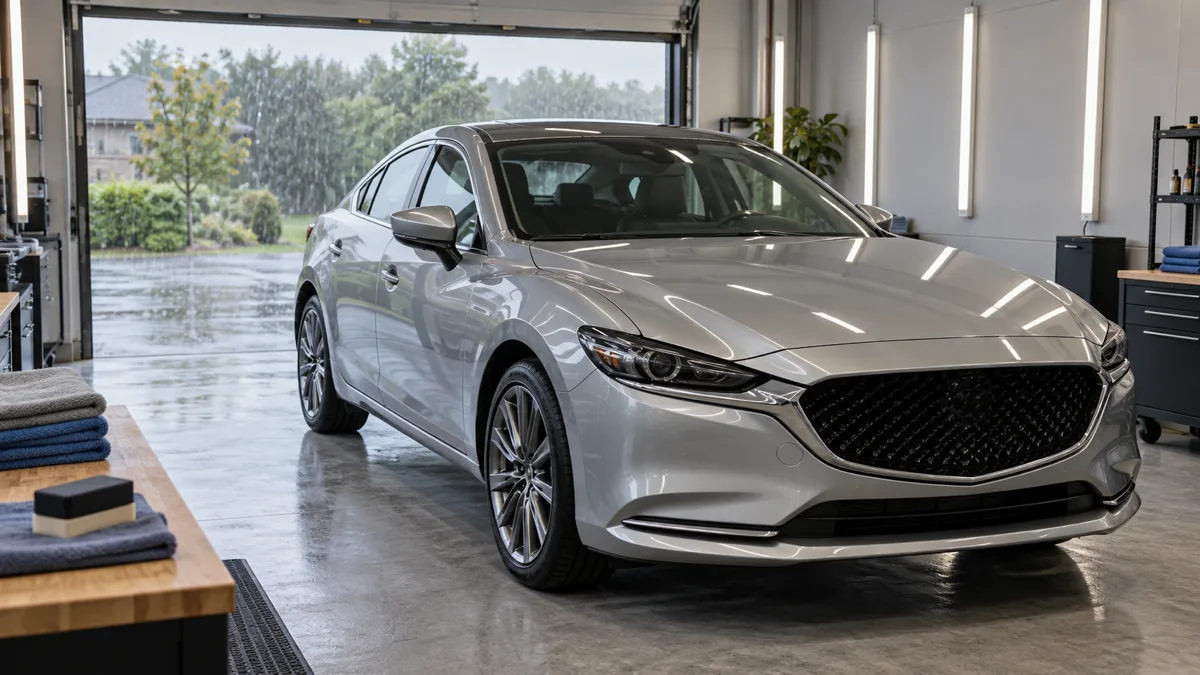
Ceramic Coating Curing Time
Ceramic coating curing time varies by product. Compare manufacturer rules for water exposure and the first wash, and plan pickup and rain protection.
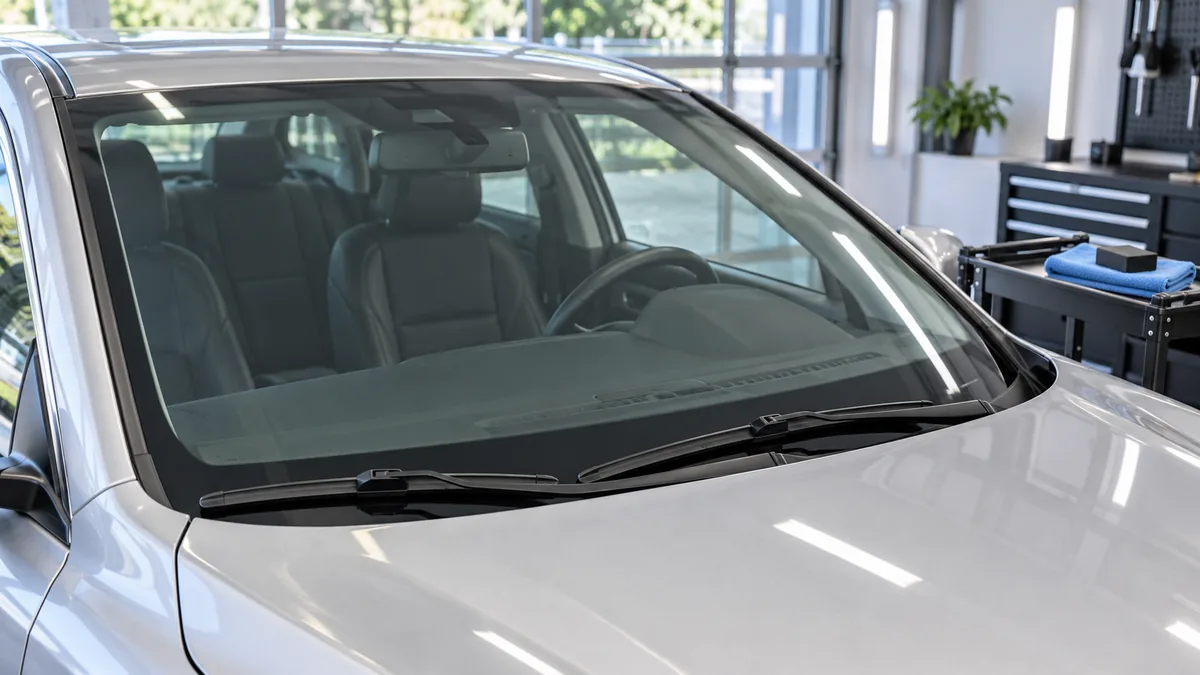
Ceramic coating for a windshield can be worth considering if your vehicle permits a hydrophobic glass treatment and you want rain repellency. Choose a product explicitly approved for exterior windshield glass, with clear preparation and aftercare instructions. Do not assume the coating used on your paint belongs on your windshield too.
Skip the treatment if your owner's manual prohibits it. For an eligible vehicle, the decision depends on the exact glass product, the work included, and how the installer handles smearing or wiper chatter. A demonstration of water beading does not answer those questions.
There are two compatibility checks: the product must permit the surface, and the vehicle must permit the treatment.
For example, the current Tesla Model 3 owner's manual directs owners to apply hydrophobic coatings only to side and rear windows, excluding the front windshield because camera visibility may be affected. It also cautions against windshield treatment fluids because they can alter wiper friction and cause chatter. That is a Model 3 instruction, not a rule for every car.
Check the manual for your model, model year, and market before adding glass protection to a detailing package. Ask the installer to explain any conflict with the vehicle's instructions rather than accepting a general claim that a coating is safe on all glass.
Surface names matter too. Gtechniq's G1 product page specifies glass and excludes headlights and plastic trim. Approval for a glass windshield does not establish compatibility with a plastic windscreen, an aftermarket film, or a camera lens.
On October 11, 2026, we compared the public product pages for Gtechniq G1, GYEON Q² View EVO, and CARPRO FlyBy30. We selected three named systems sold for exterior automotive glass and recorded their preparation steps, windshield layer guidance, and post-application water or weather instructions. This is a documentation comparison of three examples, not an application test or a ranking of their performance.
| Product and source | Published preparation and layer guidance | Water or weather timing on that page |
|---|---|---|
| Gtechniq G1 | Clean, polish with G4, and remove residue; recommends three windshield layers and G2 residue removal. | Keep the car out of the elements for at least three hours. |
| GYEON Q² View EVO | Clean and decontaminate, then use Q²M GlassPolish; refers readers to the instructions for reaction and wiping. | Says to complete curing before water exposure; the page's steps give no numbered waiting period. |
| CARPRO FlyBy30, US product page | Polish with GofX, clean with Eraser, then apply; recommends two to three windshield coats. | Gives a one-to-three-minute flash before wiping, but no post-application water hold in the directions or tips. |
All three pages specify a glass-polishing preparation step. Only the G1 page gives a numbered post-application weather hold in the instructions we reviewed. Missing detail on a product page does not mean a coating has no curing restriction: check the supplied manual and get a written pickup plan.
The comparison changes what to ask for in a quote. “Glass included” is incomplete unless the shop identifies the product, preparation, coated windows, and time before weather exposure. A quick wipe followed by an unspecified coating is not the same documented process as the examples above.
These pages may change, and regional or supplied instructions may contain additional requirements. Follow the instructions for the actual bottle and vehicle. Our ceramic coating curing-time guide explains why application flash time, pickup time, and the first permitted wash are separate questions.
The strongest reason to consider it is the rain-repellent behavior of a compatible glass product. GYEON advertises water shedding from around 50 km/h, while CARPRO's US FlyBy30 page lists 30 to 40 mph and says windshield angle affects the speed. Those are supplier claims with different conditions, not head-to-head measurements. Neither number is a reason to drive faster or stop using your wipers. (GYEON, CARPRO)
Before paying, describe your normal driving to the shop: slow urban trips, highway commuting, frequent rain, and whether the car is parked outside. Ask what benefit to expect in those conditions and what happens if wiping becomes worse. A highway water-shedding video tells you little about the experience you will have in slow traffic.
Compare the full service rather than the bottle's headline. An itemized quote should identify:
Ask for the windshield work as a separate line item if it is bundled with paint protection. That lets you decline it while comparing the rest of the package. Our installer-selection guide covers the broader questions to ask when comparing shops.
Wiper compatibility is a practical trade-off, not a detail to discover after collection. Gtechniq acknowledges that G1 may cause blade judder and directs owners to its troubleshooting guidance. Its instructions include blade cleaning and replacement when worn. CARPRO's FlyBy30 directions also include blade cleaning and a product-specific blade treatment. Do not copy that step to a different coating without its maker's guidance. (Gtechniq G1, CARPRO FlyBy30)
If a new treatment leaves distracting haze or poor wiping, document the symptoms and contact the installer before adding another repellent. Tell the shop which washer fluid you use and whether the problem started immediately after application. Ask it to assess residue, blade condition, and the treatment against the vehicle's care instructions.
Do not keep driving with impaired visibility while waiting for a coating to settle. Arrange an inspection or a suitable alternative journey. Removal or corrective polishing should follow the vehicle and product guidance; an aggressive home remedy is a poor way to diagnose an unknown treatment.
Request a short glass-care plan alongside the paint-coating instructions. It should name the permitted glass cleaner and washer fluid, the first water exposure, and any maintenance product. If the windshield and paint received different formulas, do not assume they share the same restrictions.
For example, GYEON's View EVO page permits routine glass cleaner and advises avoiding abrasive pads. That guidance belongs to that glass product. It does not authorize every paint shampoo, abrasive cleaner, or spray topper on every windshield.
For bodywork washing, use our ceramic-coated car washing guide alongside the installer’s product-specific instructions. When gathering quotes, the shop directory can help you find businesses to contact; a directory listing alone does not establish glass-product compatibility or installation quality.
Only consider it if the exact product explicitly permits windshield use and your vehicle's instructions allow the treatment. Do not infer that approval from the word “ceramic,” from paint performance, or from permission to coat side windows.
They are separate products with separate compatibility rules. A coating application does not authorize a washer-fluid additive. Check the vehicle manual and the coating's maintenance instructions before changing either.
Use the interval for the exact product and installation conditions. Our three-page comparison shows why there is no reliable universal answer: an application flash time can be listed even when the page does not state the later water-exposure restriction. Get that restriction in writing before pickup.
Treat it as one part of the quote. First establish vehicle compatibility, preparation, curing, upkeep, and the remedy for poor visibility or wiping. This documentation review did not measure durability and cannot tell you which product lasts longest on your car.
Ceramic coating curing time varies by product. Compare manufacturer rules for water exposure and the first wash, and plan pickup and rain protection.

Wash a ceramic-coated car using product-specific shampoo and curing instructions. Compare cleaning and boosters, and troubleshoot care problems.
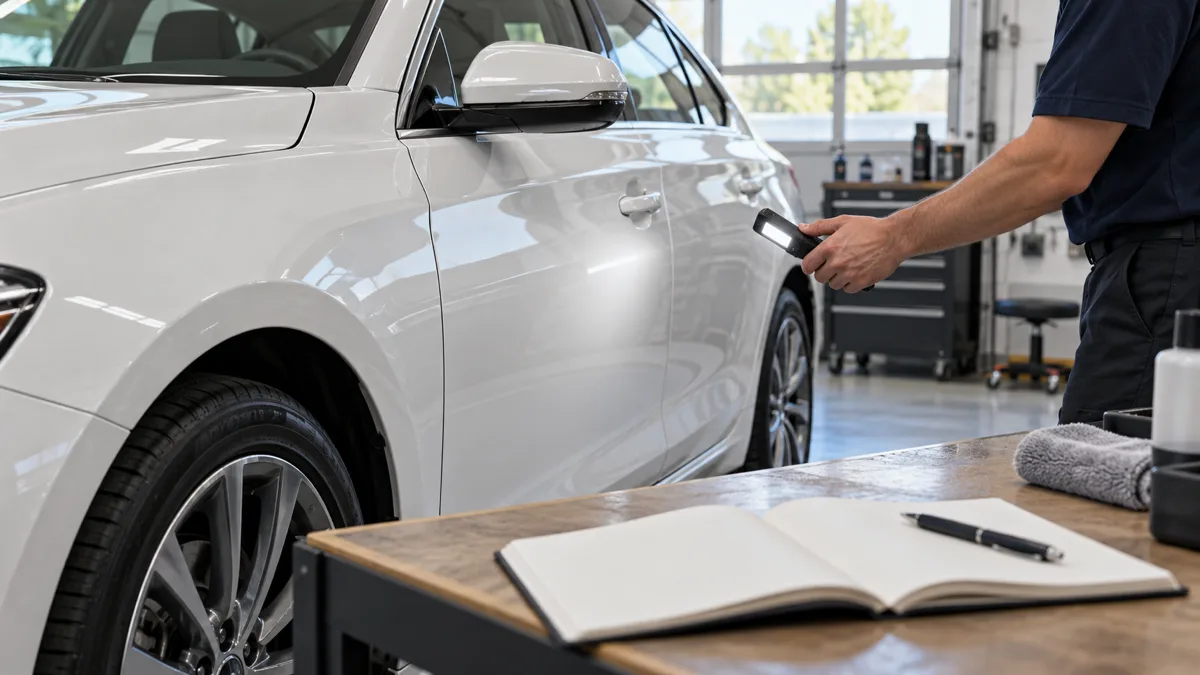
Compare ceramic coating warranty requirements, annual service rules, exclusions, and missed inspections before choosing an installer or coating package.
Get the latest updates on ceramic coating technology, tips, and exclusive offers delivered to your inbox.