
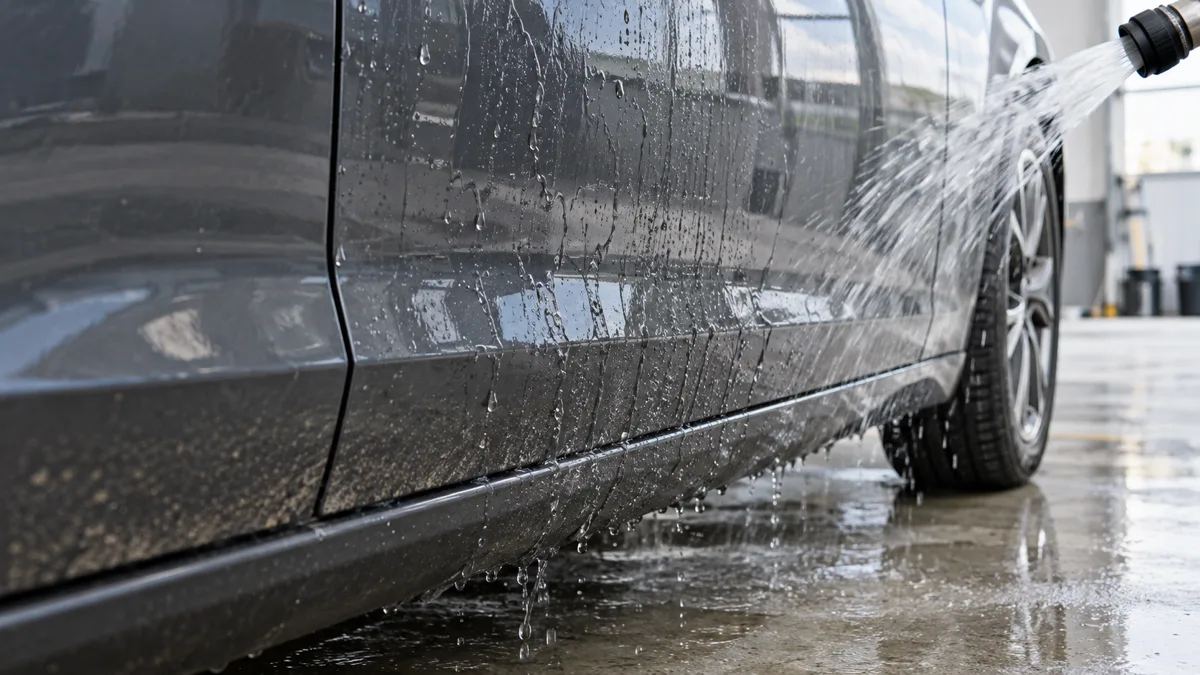
Ceramic Coating Not Beading?
Ceramic coating not beading? Check wash residue, contamination, curing, and product guidance before paying for a replacement coating.
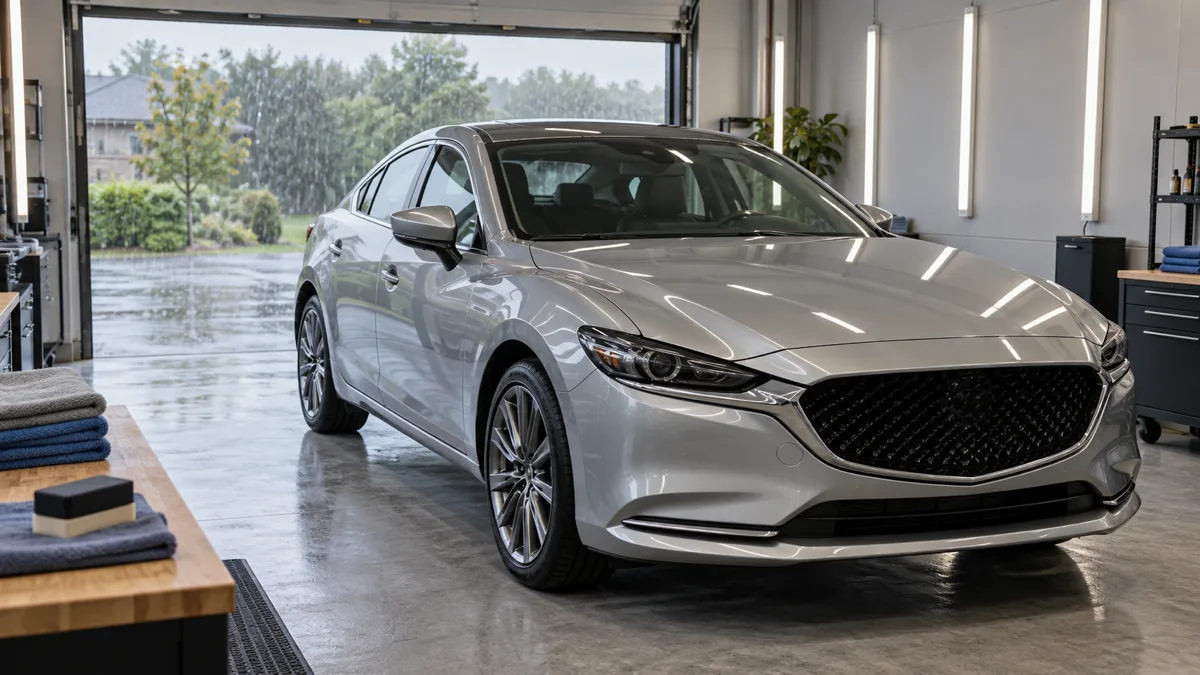
Ceramic coating curing time depends on the product and conditions. Being ready for water exposure, ready for washing, and fully cured can be separate milestones. Get the exact coating name and written aftercare schedule before pickup; do not use another product's timeline to decide when yours can get wet.
We compared three manufacturer examples on October 10, 2026, selecting them to examine differences in water exposure and washing instructions. The table reports published guidance, not measured cure times or a recommendation that one product is better.
| Coating | Water or weather guidance | First-wash guidance |
|---|---|---|
| Gyeon Q² Mohs EVO | Keep the surface away from water and direct sun for the first 12 hours. | The product page does not give a separate first-wash interval. Consult the supplied manual and installer. |
| Koch-Chemie Ceramic Body Cb0.01 | Weatherproof after at least 24 hours. | First wash no earlier than nine days; curing takes longer below 15°C / 59°F. |
| Ceramic Pro coating packages | The aftercare page describes a 2–3 week curing period depending on temperature and humidity, and says to avoid water exposure during curing. | No wash for at least two weeks after delivery. |
The comparison shows why “wait 24 hours” is an incomplete handover instruction. In Koch-Chemie's example, weather readiness precedes the first wash. Gyeon's 12-hour water restriction does not establish permission to wash after 12 hours. Ceramic Pro measures its stated washing restriction from delivery, so the clock needs clarification at pickup.
These examples apply to the named products and documentation. They do not establish a universal timeline for spray sealants, wheel coatings, glass coatings, or other formulas.
During application, flash time is the window for handling and removing excess product. It is not the same as the waiting period before rain or washing. Koch-Chemie's instructions separately address flash time, layer timing, weatherproofing, and the first wash.
If you are applying a coating yourself, write down each instruction before starting. Have a suitable dry storage space available for the required period. Our coating mistakes guide covers other application pitfalls.
For professional work, ask when the final coat was applied, how it has been stored, and which restrictions still apply after collection. Pickup means the shop is handing over the vehicle; it should also provide the remaining care instructions.
Ask the shop for these details in writing:
Koch-Chemie's specific low-temperature warning illustrates why season and storage conditions matter. Do not assume warmer weather, sunshine, or an infrared lamp allows you to shorten a timeline without confirmation for that system.
If you have no sheltered parking, tell the installer before booking. Agree on a workable handover plan rather than discovering a conflict when rain is forecast. You can compare installers and use our installer checklist when arranging the job.
Contact the installer with the coating name, application time, and exposure details. Ask whether the vehicle needs inspection and what drying or spot-cleaning method is permitted. Do not improvise an acidic spot treatment or abrasive correction on a fresh coating.
Rain exposure does not, by itself, tell you the extent of any damage. Document visible marks and follow the coating provider's advice. Our water spots on ceramic coating guide explains why a remover suitable for an existing coating may be unsuitable while it is fresh.
Contamination also needs product-specific handling. Koch-Chemie says bird droppings and insects should be gently removed promptly during its initial waiting period. Ceramic Pro directs owners to contact their certified installer for guidance during curing. A no-wash instruction should not be interpreted as permission to leave contamination unattended.
Once the manufacturer and installer permit washing, use the approved shampoo, tools, and drying method. Avoid making the first wash a test of aggressive cleaners or a chance to add an unapproved topper. Keep the written care instructions with the invoice.
Our guide to washing a ceramic coated car explains routine washing after the waiting period. Long-term durability is a separate question from initial curing; see how long ceramic coating lasts when comparing maintenance expectations.
Ask the installer to clear the vehicle for your route and weather conditions. Driving can expose it to water and contamination, even if you are not planning to wash it. There is no single driving interval established by the examples above.
No. Surface appearance does not replace the published aftercare schedule. The comparison above contains separate weather and washing milestones, so use the relevant instruction for the activity you are planning.
Only if the coating provider permits the particular cover and conditions. Ask about contact with the fresh surface and how the vehicle should be stored; a cover should not be assumed to replace the required shelter.
Ceramic coating not beading? Check wash residue, contamination, curing, and product guidance before paying for a replacement coating.
Compare ceramic coating warranty requirements, annual service rules, exclusions, and missed inspections before choosing an installer or coating package.
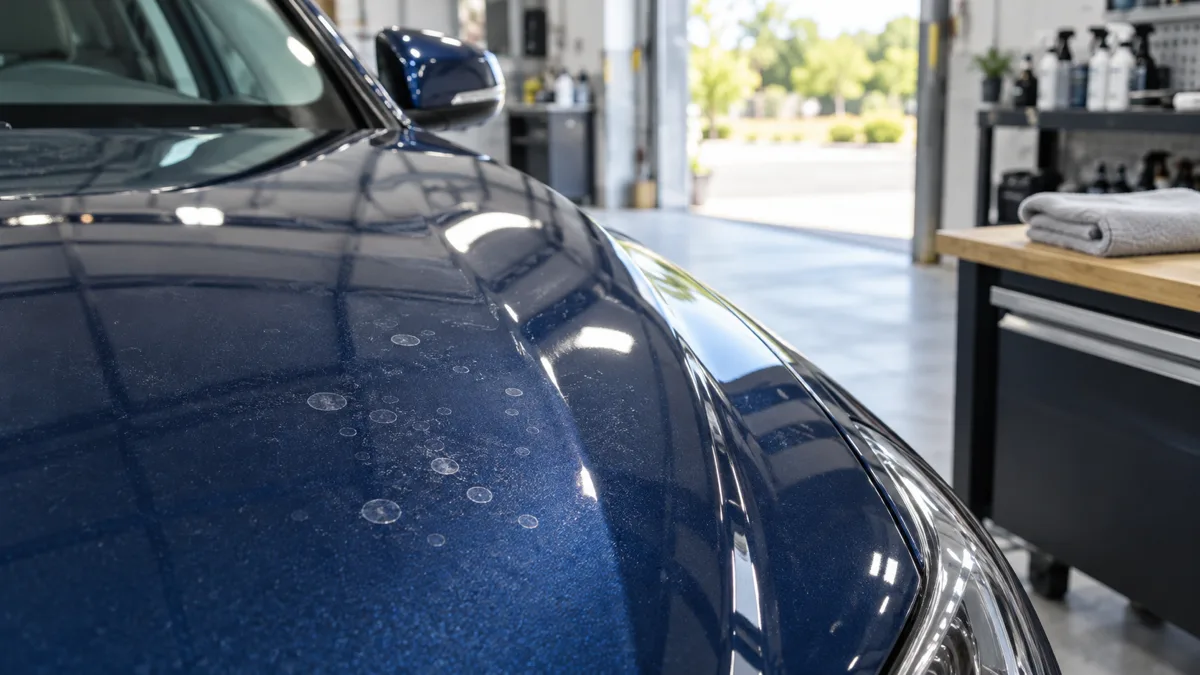
Remove water spots on ceramic coating with a product-specific plan. Compare manufacturer guidance, identify etching, and know when to call an installer.
Get the latest updates on ceramic coating technology, tips, and exclusive offers delivered to your inbox.