

Ceramic Coating Curing Time
Ceramic coating curing time varies by product. Compare manufacturer rules for water exposure and the first wash, and plan pickup and rain protection.
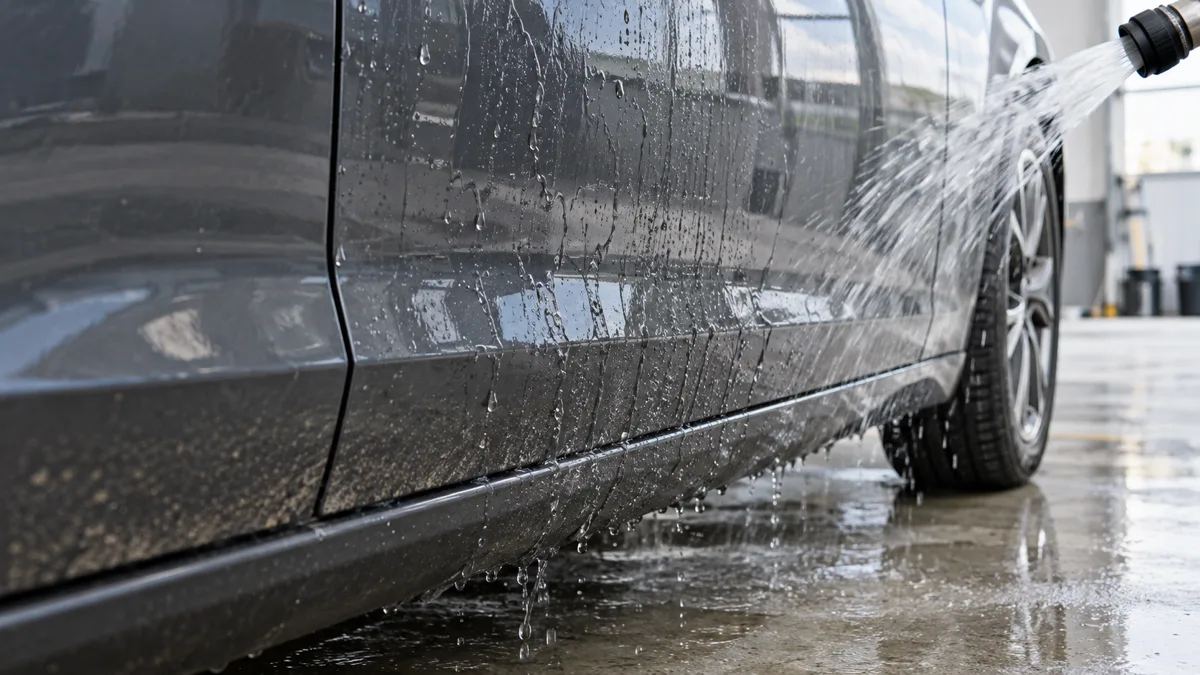
Ceramic coating not beading does not, on its own, prove that the coating is gone. Surface contamination can reduce water repellency, and manufacturers sell cleaners intended to restore the behavior of an existing coating. Start with the coating's care instructions and an approved wash. Assess the clean surface before adding a booster or paying for replacement.
Gyeon's RestartWash guidance describes contamination building up on coatings and limiting hydrophobic behavior. Koch-Chemie similarly identifies dirt, limescale, and salts that interfere with water repellency. These are manufacturer explanations, not confirmation that contamination is the cause on your particular car.
Other questions still matter: Is the coating fresh? Has the wash product changed? Was a wax, drying aid, or spray sealant recently added? Which panels behave differently? A rinse video can document the symptom, but it cannot establish how much bonded coating remains.
If the application is recent, use the ceramic coating curing time guide and contact the installer before experimenting with stronger cleaners.
We compared three manufacturer product pages on October 10, 2026, checking the stated cleaning purpose and instructions. The sample was chosen to show different approaches to coating contamination. It is a document comparison, not hands-on testing, proof that your coating can be restored, or a claim of universal compatibility.
| Product and source | Published purpose | Instruction worth checking |
|---|---|---|
| Gyeon Q²M RestartWash | Washes and decontaminates; the manufacturer says it restores existing coating behavior without adding protection. | The page lists 1:500 dilution and says to avoid hot panels and direct sunlight. |
| Koch-Chemie Reactivation Shampoo | Acidic cleaning for contamination including limescale and salts. | Its hand-wash instructions specify 50 ml in 10 L of water, thorough rinsing, and a material-compatibility check. |
| CARPRO Descale | Acidic cleaning to remove traffic film, mineral deposits, and other buildup. | Bucket dilution is 1:100; foam or spray dilution is 1:10. Do not let it dry, and rinse thoroughly. |
Our comparison found materially different instructions for products aimed at a similar symptom. The practical lesson is to identify the contamination and confirm compatibility before selecting a cleaner. “Coating maintenance shampoo” is not a single dilution recipe. A product described for coatings in general may also conflict with your particular coating's aftercare or warranty rules.
Note the coating name, application date, last maintenance service, and recent products. Photograph the affected panels and, if washing is permitted, record their water behavior during a rinse. Compare the same panels under similar conditions after cleaning.
This is a useful record for the installer, not a laboratory durability test. Avoid drawing conclusions from a dirty panel or one that still carries wash solution.
Follow the named coating's instructions using the correct shampoo dilution, clean wash tools, and thorough rinsing. Our coated-car washing guide covers routine technique. Assess the surface after rinsing away the wash solution and before applying a drying aid or topper, provided that sequence follows your product's care rules.
If performance improves, record the change. If it does not, that still does not identify the cause by itself.
Ask whether the symptoms suggest road film, mineral buildup, or another contaminant, and which treatment is approved. The manufacturer examples above show that targeted cleaning exists; they are not an instruction to use all three products in sequence.
For visible rings or staining, read our water-spot treatment guide. Stubborn marks may need a different assessment from reduced water repellency. Do not escalate to clay or abrasive polish simply to make the panel bead again without discussing the effect on the coating.
Check the treated panel after the prescribed rinse and finishing steps. A restored response supports the usefulness of that cleaning step, but does not prove a remaining lifespan. If water behavior remains poor, ask the installer to assess wear, application issues, and any need for correction or reapplication.
Adding a hydrophobic product introduces another variable. Gyeon describes WetCoat as adding water repellency, whereas its RestartWash page says the cleaner does not add protection. Beading after a topper therefore cannot, by itself, demonstrate that the underlying coating recovered.
Arrange an inspection if the symptoms persist after permitted cleaning, appear soon after a professional application, or accompany visible streaks, spots, or other defects. Bring the invoice, care instructions, photos, and a list of treatments already attempted.
Review the ceramic coating warranty before another shop alters the surface. Ask for an assessment and a written explanation of the proposed work before authorizing a full replacement. You can find a coating shop if the original installer is unavailable.
It is one surface behavior to observe, not a measurement of remaining coating thickness or years of protection. Contamination and added hydrophobic products complicate the interpretation. The lifespan guide addresses longer-term expectations separately.
Not necessarily. Match the treatment to the surface, coating, and contamination, then follow the specified dilution. Stronger concentration is not a substitute for diagnosis and may conflict with the care instructions.
First have it cleaned and assessed according to the coating provider's guidance. If reapplication is needed, ask what preparation is required and whether the quote covers the affected panel or the whole vehicle.
Ceramic coating curing time varies by product. Compare manufacturer rules for water exposure and the first wash, and plan pickup and rain protection.
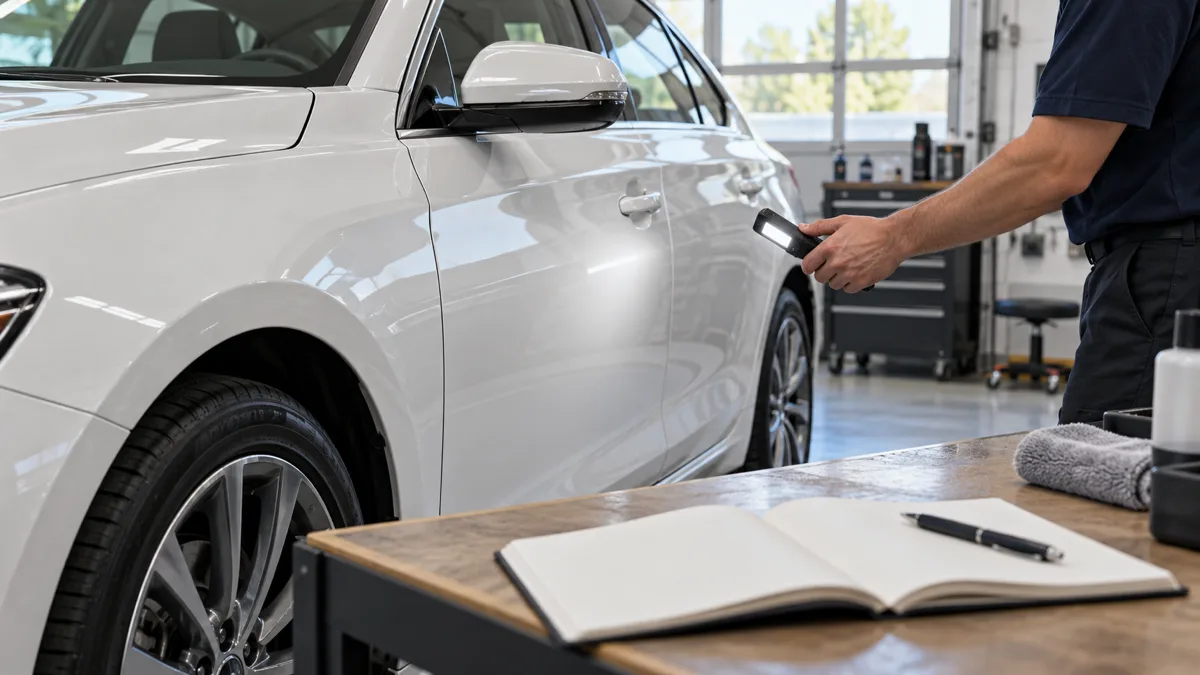
Compare ceramic coating warranty requirements, annual service rules, exclusions, and missed inspections before choosing an installer or coating package.
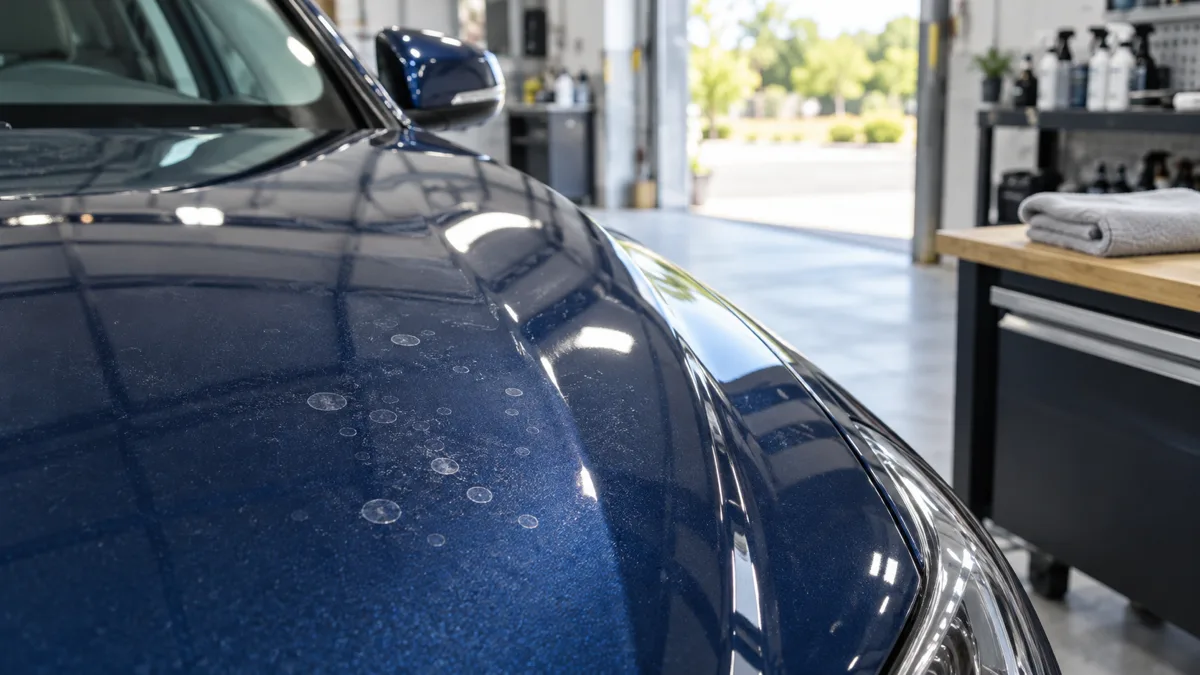
Remove water spots on ceramic coating with a product-specific plan. Compare manufacturer guidance, identify etching, and know when to call an installer.
Get the latest updates on ceramic coating technology, tips, and exclusive offers delivered to your inbox.