
Ceramic Coating Door Jambs: Worth It?
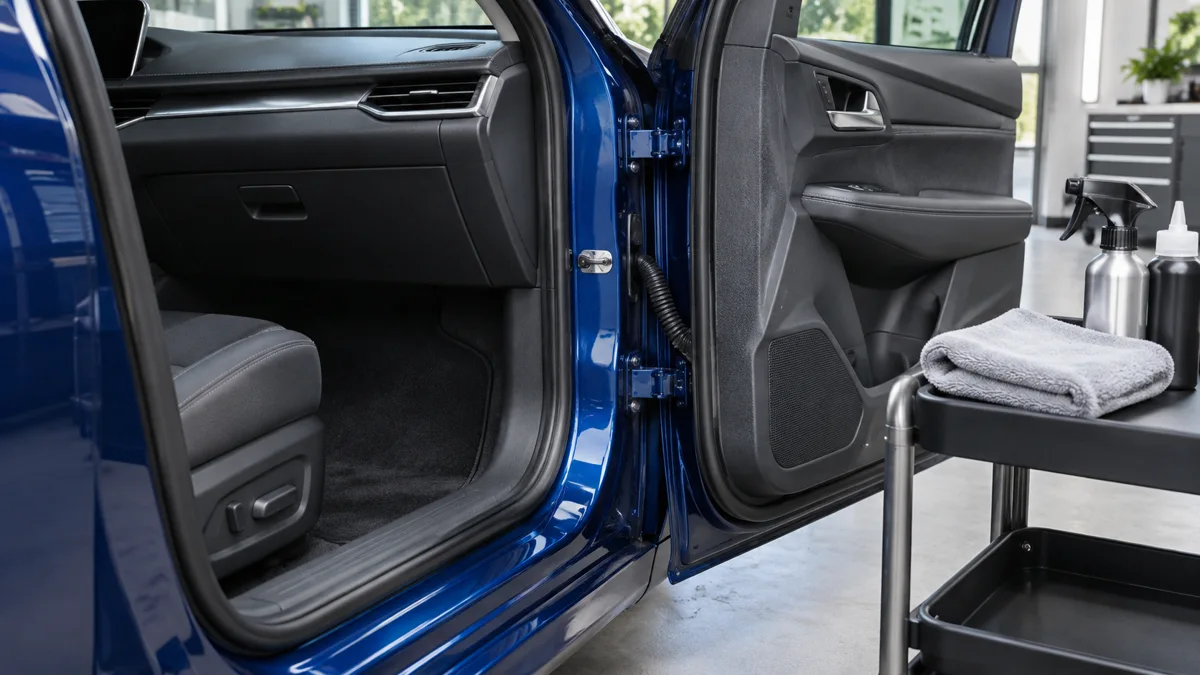
Ceramic coating door jambs makes sense when you want easier upkeep of the painted door openings and are willing to pay for their preparation. For a daily driver whose jambs just need occasional cleaning, a compatible spray sealant is the simpler starting point. Ask for painted jambs as a separate line on the quote: an exterior coating package does not tell you which surfaces behind closed doors are included.
Start by separating the painted opening from the rubber seal, plastic step trim and door hardware. Those parts need different care. If your main concern is shoes striking the sill, ask about a physical sill protector or suitable paint protection film rather than buying a coating for that job.
What should ceramic coating door jambs cover?
Have the installer show you the proposed boundary with the door open. “Door jambs” can mean the body-side painted opening, the painted edges of the door, or both. Rear doors, trunk openings and hatch shuts need their own agreement.
Use this surface map when comparing offers:
| Area | What to specify | Question to settle |
|---|---|---|
| Body-side painted jamb | Accessible painted faces and lower sill | Is cleaning, preparation and coating included? |
| Painted door edges | Inner painted perimeter | Can the installer reach and level the product here? |
| Plastic sill trim | Separate material and product | Is this included or left untreated? |
| Rubber weatherstrip | Vehicle-specific seal care | How will paint-preparation chemicals be kept off it? |
| Hinges, latch and wiring | Excluded from the paint-coating application | How will functional parts and lubrication be left undisturbed? |
| Trunk or hatch opening | Separate painted area | Is it priced separately from the doors? |
This avoids paying for a broad label and discovering at collection that only the visible lower sill was treated. Our installer-selection guide covers the wider preparation and handover questions.
Spray sealant or coating: compare the actual work
The bottle's spray trigger does not tell you how much preparation or drying time the job needs. Compare these two manufacturer workflows:
| Decision point | Gtechniq C2 Ceramic Sealant | GYEON Q² CanCoat EVO |
|---|---|---|
| Application method | Spray onto a clean microfiber, wipe in small sections, buff with a second dry towel | Spray into the supplied towel away from the car, wipe on and off in small sections |
| Preparation distinction | Clean surface; also has a wet-surface drying-aid method | Oil-free, completely dry surface; Q²M Prep, then a 15-minute wait |
| Early water exposure | The listed application steps do not specify a fixed dry-storage interval | Keep dry for the first 12 hours |
| Practical jamb decision | Suits a simple towel-applied protection step after cleaning | Plan preparation and dry storage before booking or starting |
Sources: Gtechniq C2 application instructions and GYEON Australia's CanCoat EVO instructions.
For a narrow jamb, the useful common feature is towel application: you can work on the painted face without spraying the whole door opening. The important difference is the dry preparation and storage commitment. Choose the workflow you can complete, including the awkward painted corners. Keep each product's instructions together rather than combining one product's preparation with the other's application method.
A shop offering its usual professional paint coating should name that product and explain its jamb process. These two examples give you questions to ask; they do not establish the instructions for another coating. For the broader equipment and labor decision, see DIY versus professional ceramic coating.
Keep seals and mechanical parts out of the paint job
Tesla's Model Y cleaning instructions give a concrete example of why a door opening cannot be treated as one surface: the manual specifies a damp cloth for door seals and says to avoid alcohol wipes or chemicals that could deteriorate their coating. It also says not to direct hoses at door seals, electronics or exposed cabling.
For your car, check the corresponding manual before choosing cleaners or seal treatments. Keep the paint applicator and preparation towel on the intended painted area. Leave hinge grease, latch mechanisms, wiring boots, identification labels and drainage openings out of the coating pass. A jamb detail is not a reason to degrease a working hinge or fill a recess with product.
Use a separate cloth for the interior trim so residue from paint preparation does not get carried onto it. If the painted area cannot be reached and wiped cleanly, ask the installer to define what will remain untreated.
When is the extra service worth paying for?
Add jamb coating when you already have the vehicle booked for coating, want the inner painted finish maintained alongside the exterior, and receive a clear preparation and coverage description. It is easier to assess the value of a named service than an unexplained “full vehicle” upgrade.
Choose a simpler sealant routine when the paint is sound, access is easy, and you are comfortable cleaning and renewing protection yourself. Spend on repair first if the sill has chipped paint, corrosion or a damaged finish. A coating application does not repair those defects.
For a scuffed entry area, separate two questions: can the existing mark be corrected, and what will protect the area from repeated contact? Ask a film installer about coverage on the actual painted sill. Our ceramic coating versus PPF guide explains the difference in protection roles.
Before accepting an add-on, get these details in writing:
- Which door openings and door edges are included, plus any trunk or hatch area.
- The exact protection product and preparation steps for the painted surfaces.
- What happens to existing marks, chips or contamination before application.
- The extra charge and added collection or dry-storage time.
- Whether the jamb treatment has the same care requirements and written coverage as the exterior package.
Use the coating-cost quote worksheet to keep that scope beside the price, then compare coating shops with the same list.
How to maintain protected jambs
Include the painted openings in your wash routine rather than waiting for grime to build up. Remove loose debris without grinding it into the finish, use a compatible cleaning method with controlled moisture, remove residue, and dry the accessible painted areas. Keep used jamb towels separate from clean exterior-paint towels.
Use the installer's cleaning instructions for the product actually applied. Do not automatically add a new sealant after every wipe-down or use a stronger cleaner because an area sits out of sight. Our coated-car washing guide covers the surrounding maintenance routine.
At collection, open every included door and inspect the painted corners under good light. Ask the shop to address visible streaks or missed areas before adding a product yourself. Keep the product name and care instructions with the invoice so future maintenance follows the right system.
Stay Updated with Ceramic Coating News
Get the latest updates on ceramic coating technology, tips, and exclusive offers delivered to your inbox.