

Ceramic Coating on a New Car
Decide whether to coat a new car by inspecting the paint, comparing dealer and detailer offers, and checking preparation, film and care requirements.
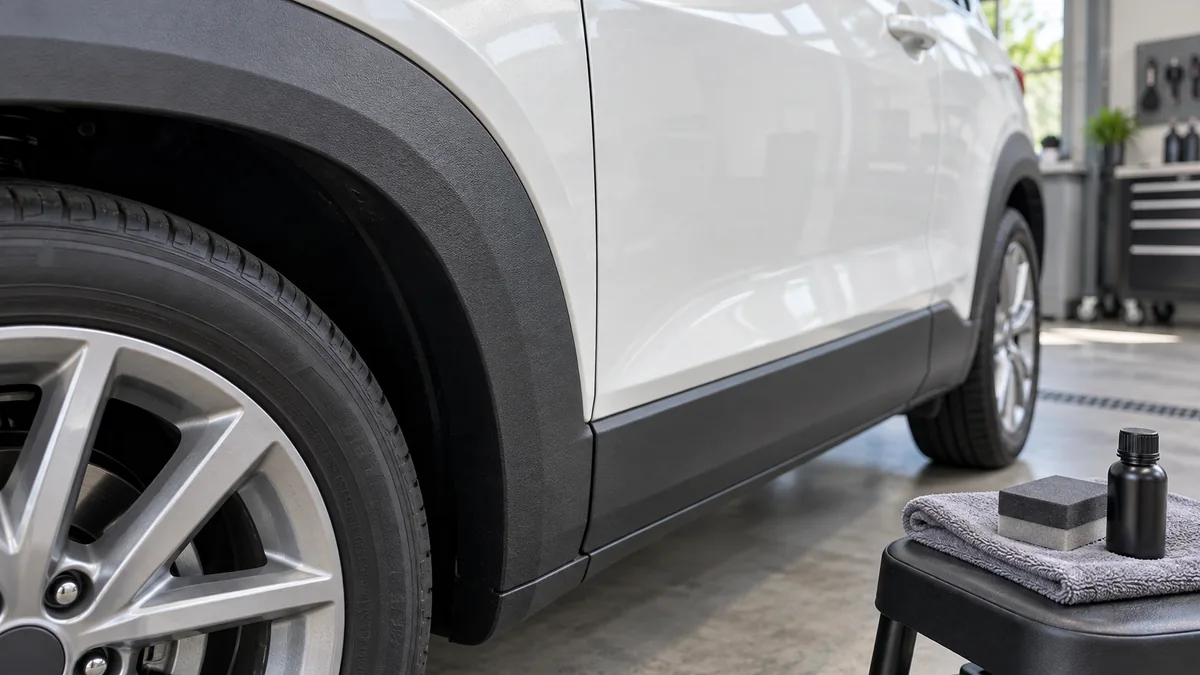
Ceramic coating for plastic trim can be worth considering when the product explicitly supports your exterior trim and you want the finish it produces. Identify the surface, remove old dressing as instructed, and check the appearance on an inconspicuous area before treating the whole piece. A paint-coating package does not establish that its product or application method suits every plastic part.
For faded trim, agree on the intended appearance before buying protection. Ask whether the proposed work is cleaning, color restoration, coating, or replacement of damaged parts. Those are different jobs, even when a seller bundles them together.
Walk around the clean vehicle and list the pieces you want treated. Record whether each is textured unpainted cladding, smooth unpainted plastic, painted trim, gloss-black trim, a light lens, or rubber. If you cannot tell, ask the installer or vehicle manufacturer rather than identifying the material from its color alone.
That list makes a quote more useful. “Exterior trim included” leaves unanswered which pieces receive which product. Ask the installer to mark included parts and exclusions, particularly where unpainted cladding meets painted panels, window seals or lights.
Do not assume a coating advertised for black plastic should go on interior controls, a steering wheel or every transparent lens. Obtain explicit compatibility for the actual surface and use. Our wheel-coating guide covers wheels separately, even when a product is marketed for both wheels and trim.
On October 14, 2026, we compared the current GYEON Q² Trim EVO product page, CARPRO US CQUARTZ DLUX page, and CERAKOTE Trim Coat product and instruction pages. We selected these three examples to compare two bottled coatings with a pre-saturated wipe kit. This is a documentation comparison, not an application test, product ranking or representative market survey.
| Product and primary source | Preparation detail | Application difference that matters |
|---|---|---|
| GYEON Q² Trim EVO | Remove old dressing and contamination; use Q²M Prep on an oil-free, dry surface and wait 15 minutes. | Level evenly and wipe off within 10–30 seconds. |
| CARPRO CQUARTZ DLUX | Clean, rinse, dry, then use Eraser and allow 20 minutes for evaporation. | On textured trim, distribute evenly without wiping off; smooth plastic has different wipe-off guidance. |
| CERAKOTE Trim Coat | Wash with a detergent containing no wax and dry completely, including trapped water. | Apply the supplied wet wipe in overlapping passes; allow at least one hour before driving or moisture exposure. |
The clearest finding is the opposing wipe-off advice for the two bottled products. Copying GYEON's leveling step onto DLUX textured trim, or copying DLUX's leave-on method onto GYEON, would depart from the cited instructions. “Apply ceramic coating to trim” is therefore an incomplete method.
Keep the instructions for the exact version in your kit. The table highlights differences; it is not a complete application manual. If the package and website disagree, obtain clarification from the supplier before starting. For broader workspace and responsibility questions, see DIY versus professional coating.
GYEON says Trim EVO suits new and faded trim and leaves a natural matte or satin finish. CERAKOTE describes Trim Coat as a coating for unpainted plastic that restores its appearance. These are the suppliers' descriptions, not our measured results on your vehicle.
Ask to see the proposed product on a small, representative hidden section after the instructed drying period. Compare it with your intended finish in ordinary daylight. Decide whether the color and sheen are acceptable before committing to every visible panel.
For old, uneven trim, photograph the condition and ask what the installer expects to remain visible. Do not approve “restoration” without an agreed outcome and a plan if the sample looks blotchy. A demonstration on another vehicle does not answer what your weathered part will look like.
Cracks, broken clips and a desired color change should be discussed as repair or refinishing work. Do not accept a coating description as a repair scope. If the part needs replacement, price that separately before paying to coat it.
CARPRO US specifically cautions about DLUX on brand-new textured plastic. Its explanation includes possible residual dealer dressing and difficulty correcting discoloration on texture. This product-specific warning is a reason to ask questions, not evidence that all trim coatings are unsuitable for new cars.
Tell the installer about known dressings or previous treatments. If you do not know what the dealership applied, say so. Ask how the proposed cleaning process and product choice address that uncertainty. Our new-car coating guide explains how to define the rest of the package without assuming a new vehicle needs no preparation.
Schedule the job around the product's actual dry period. CERAKOTE's instructions emphasize releasing trapped water by opening and closing body panels. A surface that looks dry at first glance may therefore need further attention before application.
Keep a written sequence for the selected product: compatible cleaning, drying, panel preparation if specified, application, leveling, protection from water and first wash. Do not combine the shortest waiting time from each row of the comparison into a new method.
For later maintenance, GYEON specifies pH-neutral shampoo and says dressings are unnecessary over Trim EVO. Use the instructions for your own coating alongside our coated-car washing guide. If the appearance changes, record the product, installation date and cleaners used before trying another restorer on top.
When comparing local installers, request these details in writing:
Keep trim work as a separate line when comparing a whole-car package. Our coating cost guide helps compare known charges; it does not establish a national trim-coating price.
Choose DIY only when you can identify the surface, follow the complete instructions and handle the proposed application. Compare professional help when compatibility, old treatments or an uneven finish needs assessment. Paying a shop should buy a defined preparation and application job, with a clear response if the result differs from the agreed sample.
Check the exact product's approved surfaces first. Being sold as ceramic coating does not establish plastic compatibility. Even the dedicated trim products above give different application instructions.
Do not borrow a paint-polishing remedy. CARPRO US warns that removing DLUX from textured plastic through polishing can change its appearance. Contact the product supplier or installer with photos and the application details before attempting correction.
No. Initial appearance is not a durability measurement. Our comparison checked published instructions and compatibility statements; it did not measure weathering, wash resistance or lifespan.
Decide whether to coat a new car by inspecting the paint, comparing dealer and detailer offers, and checking preparation, film and care requirements.
Compare DIY and professional coating by product, preparation, workspace, costs and warranty. Use sourced examples to choose the work you take on.

Avoid coating mistakes with product-specific preparation, leveling, curing and care. Distinguish high spots, water marks and reduced beading.
Get the latest updates on ceramic coating technology, tips, and exclusive offers delivered to your inbox.