
Drying a Ceramic Coated Car
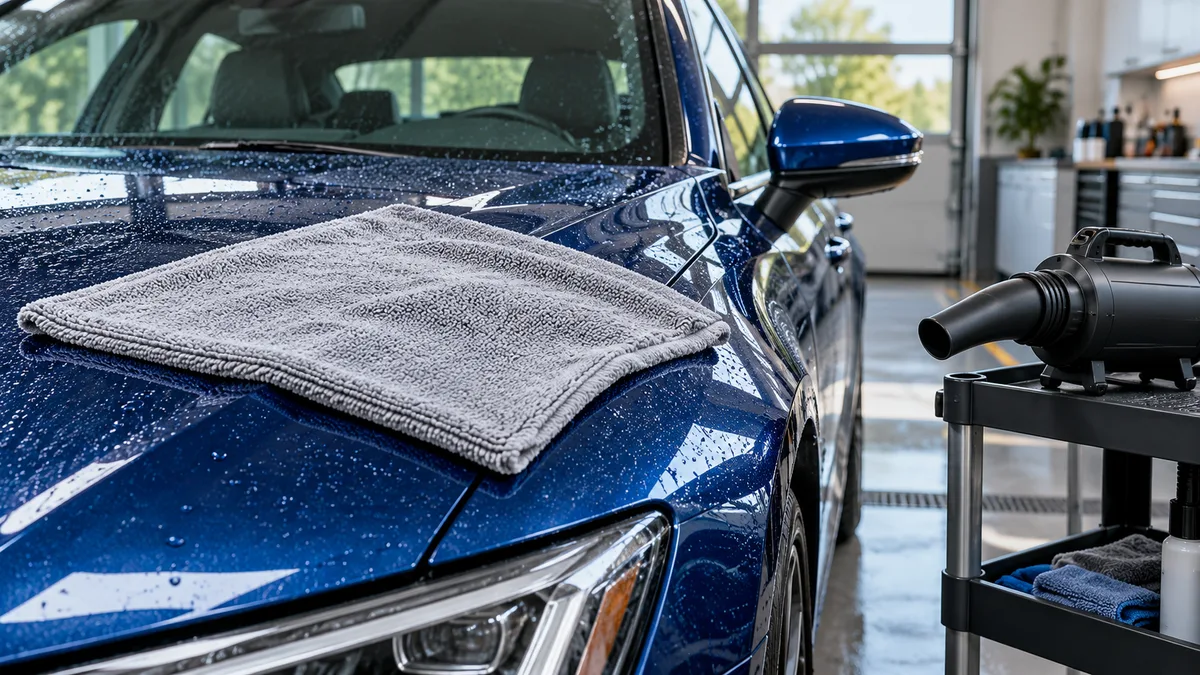
Drying a ceramic coated car means removing wash water with a clean automotive drying towel, suitable forced air, or both, following the coating's care instructions. Do it after cleaning and rinsing, before water evaporates on the paint. If you applied a maintenance product during the wash, check its finishing directions: a blower may not replace the required wipe.
This guide covers routine drying of coated paint cleared for washing. A fresh installation needs the installer's instructions for accidental rain or other water exposure; check the curing and first-wash guidance before starting a maintenance wash.
Towel or blower: compare the instructions
We reviewed four deliberately selected manufacturer sources on October 25, 2026. Two describe drying towels; two explain drying within a coating-care routine. This is a comparison of published instructions, not a scratch test, speed trial or ranking of equipment.
| Manufacturer example | Published drying direction | What changes your choice |
|---|---|---|
| GYEON Q²M SilkDryer EVO | Lay flat on the wet surface, gently pull or pat, and avoid added pressure. The page identifies it as suitable for coated vehicles. | Patting and gentle pulling are both permitted for this towel; hard rubbing is unnecessary. |
| CARPRO DHydrate | Lay flat and drag slowly across the surface. CARPRO includes coated surfaces in its stated uses. | Follow the towel's own motion instructions rather than assuming every towel must be used the same way. |
| Ceramic Pro aftercare booklet | Permits microfiber drying towels and compressed air; recommends AG Detail Spray after air drying. | Air is an accepted method in this system, with a separate recommended finishing product. |
| Bowden's Own coated-car drying guide | Allows a small blower generally, but says the initial dry after Happy Ending or Wet Dreams should be a wipe-down. | A rinse-applied product can change the finishing step even when the underlying coating is unchanged. |
The practical finding is that water removal and product finishing are separate tasks. A blower can move droplets without spreading a recently applied treatment evenly. Bowden's Own gives a named exception to a blanket “always use air” rule. It does not establish that every rinse sealant needs wiping, or that those products are approved for your coating.
Check the last product used before choosing equipment. If the wash added no protection, consult the coating's routine drying rules. If it added a treatment, resolve both sets of instructions. Our wax and topper guide explains the separate compatibility decision.
Set up before the final rinse
Finish the approved washing process before towel contact. A drying towel is not a substitute for washing remaining dirt away.
Dr. Beasley's drying guide explains how residual particles can be caught and moved by a towel. It also identifies forced air as useful around mirrors, trim, badges and gaps. That supports reducing unnecessary contact; it does not make either method a guarantee against damage.
Prepare the following before water is sitting on the bodywork:
- A clean automotive drying towel and a clean spare. Inspect the contact faces, edges and any attached labels before use.
- Separate towels for wheels and dirty lower areas, so those tools do not return to painted body panels.
- A suitable vehicle dryer, if used, operated according to its equipment instructions. Check its nozzle and air path for debris, and keep the nozzle from touching the finish.
- Shade and a surface within the care products' temperature limits. Ceramic Pro's booklet specifically excludes washing in direct sun or on warm surfaces.
Use a system you can finish where you park. Buying a blower does not solve a wash routine in which panels dry before you reach them.
Dry the panels, then check the drip points
For towel drying, use the motion specified by the towel maker. GYEON permits gentle pulling or patting; CARPRO describes a slow flat drag. Neither instruction calls for scrubbing remaining marks. Inspect the towel as you work and change it if it picks up contamination. Stop and clean a dirty panel rather than carrying that dirt farther.
If the towel stops taking up water, address saturation instead of pressing harder. GYEON explicitly permits wringing its SilkDryer EVO and continuing. Follow your own towel's instructions and keep a clean spare available. Wash the GYEON towel after use with its recommended dedicated microfiber detergent.
For forced-air drying, move water off the surface and out of accessible gaps, following the equipment and vehicle guidance. Keep checking adjacent panels for displaced droplets. Use an approved clean-towel finish where water remains, and perform any product-specific wipe required by the treatment used during washing.
Inspect mirror housings, handles, badges and trim after the main panels are dry. These are places where a car can appear finished while retained water later runs onto the paint. Catch drips with clean media; do not chase them with a towel already used on wheels or the ground.
Know when drying is finished
Do not equate forced air with leaving the car to dry naturally. One actively removes water; the other leaves droplets to evaporate. Gtechniq explains that evaporating water can leave dissolved minerals behind and advises prompt drying after washing. If visible rings remain, use the water-spot assessment guide rather than increasing towel pressure or adding an unapproved chemical.
Streaks after a maintenance spray need a different check: record the product, amount and application conditions, then consult its finishing instructions. More spray is not automatically the remedy. Changed water behavior also needs assessment before buying replacement protection; see the not-beading guide.
When arranging aftercare with an installer, ask for the permitted drying method and any required finish for the exact coating and topper. If you need help, compare coating shops and request those instructions alongside the wash and inspection requirements.
Stay Updated with Ceramic Coating News
Get the latest updates on ceramic coating technology, tips, and exclusive offers delivered to your inbox.