
Rinseless Wash on Ceramic Coating
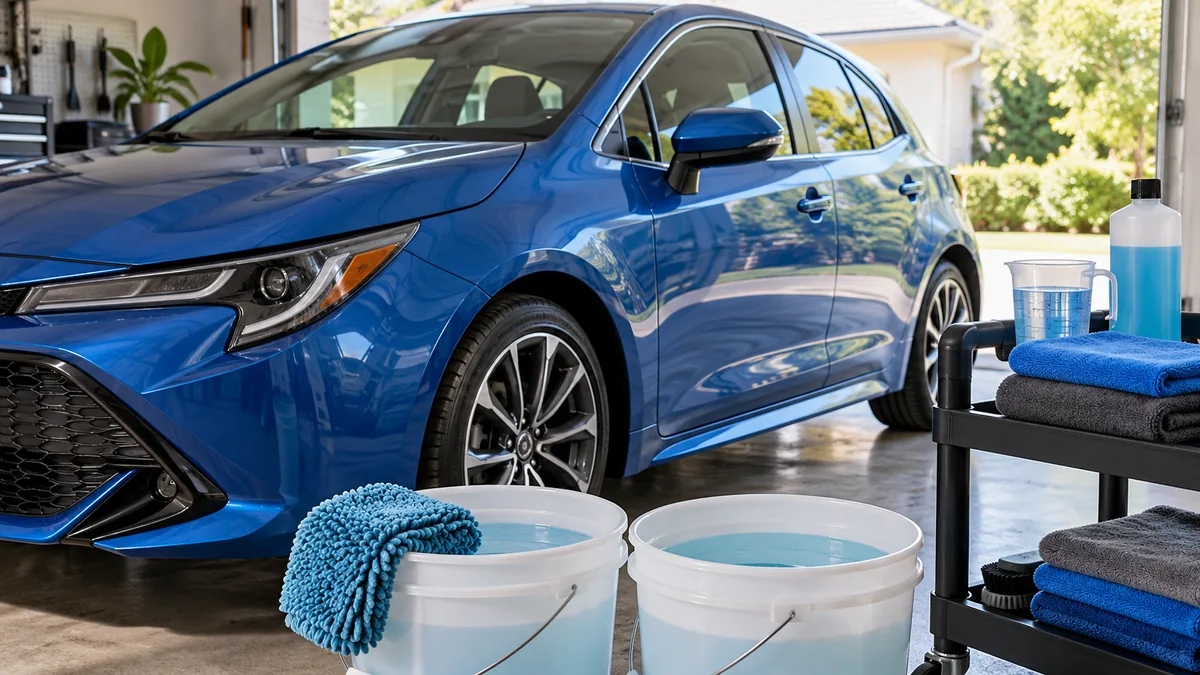
A rinseless wash can suit ceramic coating when the wash product and your coating's care instructions allow it. Use the specified dilution, clean wash media and a section-by-section wash-and-dry process. Heavy grit still needs removal before contact. A coating does not make dragging sand across paint a safe shortcut.
This method is useful when you can bring measured water to the car but have no hose at your parking space. It is less suitable as the first step on a vehicle covered in mud or caked-on salt. Newly installed coatings also need their own first-wash clearance.
Rinseless wash on ceramic coating: choose the right method
Rinseless means cleaning with a diluted wash solution and drying without a final hose rinse. Waterless washing generally uses a spray-and-wipe approach. Neither term means rubbing a dry towel over dirty paint, and a multi-use concentrate may need a different mix for each method.
For a concrete example, GYEON's global EcoWash instructions list rinseless, waterless and drying-aid uses separately. Its rinseless range is 1:256 to 1:150; its waterless range is 1:15 to 1:10. GYEON identifies the product as suitable for coated vehicles and says it adds light water repellency. That is a named product claim, not approval for every cleaner or coating combination.
Before buying a concentrate, write down the exact coating, wash product and intended method. If you want a conventional hose wash instead, use our broader coated-car washing guide.
Three product instructions, compared
We compared three current product pages on October 24, 2026: two Optimum/Opti-Coat products and GYEON EcoWash. This is a purposive instruction comparison, not a cleaning test or a market-wide ranking. We checked wash dilution, coating suitability and whether the page distinguishes maintenance from preparation for new protection.
| Product and primary source | Published rinseless mix | Decision-relevant distinction |
|---|---|---|
| Optimum No Rinse Wash & Shine Version 6 | 1 US fluid ounce in 2 US gallons of water | Manufacturer permits coated-paint maintenance and use before protection application. Follow the coating's separate preparation instructions. |
| Opti-Coat No Rinse | 1 US fluid ounce in 2 US gallons of water | Manufacturer describes added SiO₂ and excludes use before polishing, correction or new protection application. |
| GYEON EcoWash, US page | 1:256 to 1:150 | Different mixes serve waterless washing and drying assistance. For mitt washing, GYEON recommends a separate rinse bucket with a little EcoWash and a grit guard. |
The useful finding is that matching dilution does not establish matching purpose. The two No Rinse products share a bucket dose but have different preparation guidance. If a shop is washing before applying fresh protection, ask which version it plans to use. Do not treat a maintenance wash as the complete surface-preparation process.
For routine upkeep, confirm whether the coating provider permits the proposed wash and any deposited maintenance ingredients. Our wax and topper guide explains why cleaning permission and permission to add another treatment are separate questions.
Measure a four-liter bucket correctly
Here is our conversion of those published instructions to a common water volume. Each recipe starts with 4,000 mL of water, then adds concentrate. These are calculated mixing examples, not measured cleaning results or a claim that four liters will wash every vehicle.
| Published dilution | Concentrate added to 4 liters of water |
|---|---|
| No Rinse products: 1 US fl oz per 2 US gal | 15.6 mL |
| EcoWash: 1:256 | 15.6 mL |
| EcoWash: 1:150 | 26.7 mL |
For the US-volume recipe, two US gallons contain 256 US fluid ounces, giving one part concentrate to 256 parts water. For each metric recipe, divide 4,000 by the water-parts number: 4,000 ÷ 256 = 15.625, or 4,000 ÷ 150 = 26.667. Figures above are rounded to one decimal place. Check your bottle's local directions before mixing.
Keep the water volume distinct from the final solution volume. A recipe that starts with four liters of water will finish slightly above four liters after concentrate is added. Measure with a suitable marked container; an unspecified bottle cap is not a reliable unit.
The EcoWash ranges also expose a practical mix-up: at the same starting water volume, 1:15 uses about 17 times as much concentrate as 1:256. That is arithmetic, not evidence of better cleaning. Label spray bottles by product, dilution and intended use so a waterless mix does not become your default bucket recipe.
Decide when to pre-rinse
Optimum's rinseless-wash guide separates ordinary maintenance soil from thick mud, caked-on salt, sand and construction dust. It advises removing the abrasive bulk before contact washing. A rinseless product does not eliminate that decision.
If those deposits are present and you cannot pre-rinse at home, arrange access to suitable rinse facilities before continuing. Check any proposed pressure-washer method, especially around film edges. An automatic wash needs its own compatibility check rather than becoming an assumed substitute.
For the actual contact wash, Opti-Coat's care guide calls for working from upper areas down, separate wheel tools, clean wash media and drying each section. It warns against returning heavily soiled media to clean solution without rinsing it thoroughly. GYEON's global instructions likewise call for frequent towel flipping to avoid dragging dirt.
Set out clean replacement media before starting. Stop when a panel or towel still carries visible debris; do not try to solve it by pressing harder. If solution dries before you finish a section, the No Rinse product directions say to rewash that section and dry again. Choosing shade and manageable sections makes the process easier to control.
Resolve problems before adding protection
Record the product and mix if you see streaks or a change in water behavior after washing. Check whether the intended use matched the dilution and whether the surface was clean before drying. Added repellency from a maintenance product is not a measurement of the underlying coating's condition.
Persistent deposits need identification and an approved treatment. Our not-beading guide explains the checks before buying more protection. If you need professional help, compare coating shops and ask for the exact care method, preparation scope and any inspection requirement in writing.
Stay Updated with Ceramic Coating News
Get the latest updates on ceramic coating technology, tips, and exclusive offers delivered to your inbox.