
Tar Remover on Ceramic Coating
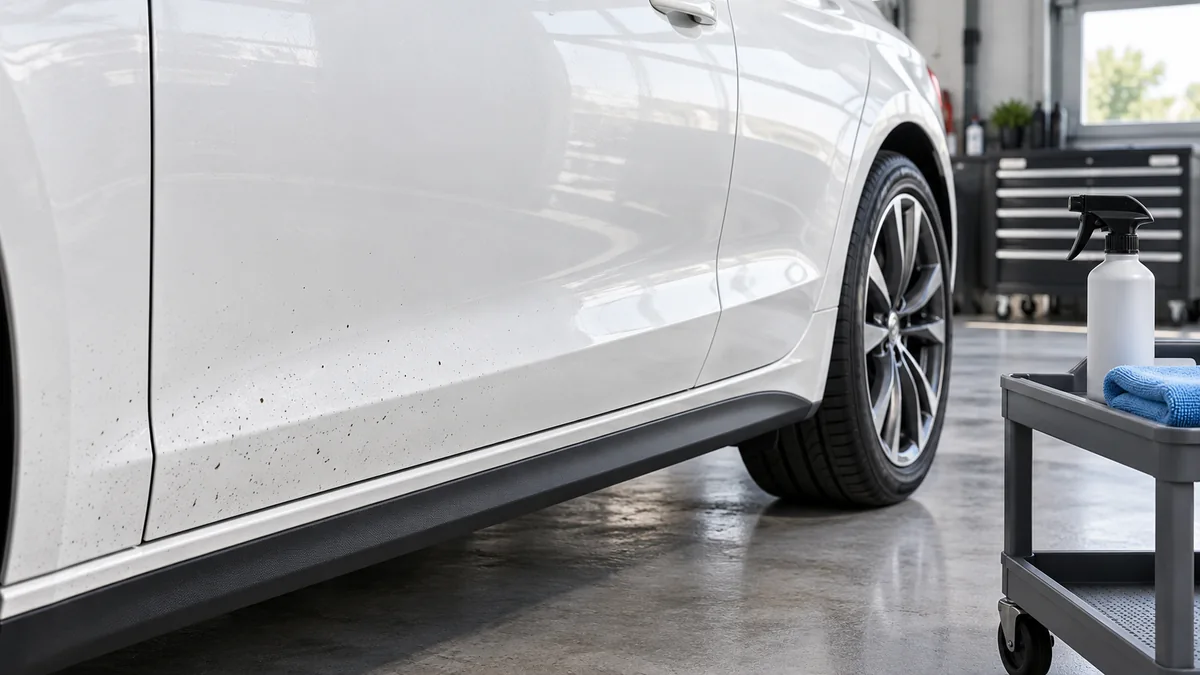
You can use a tar remover on ceramic coating when the exact cleaner is suitable for that coating and the surface underneath it. Check the product name, exclusions and application instructions before treating the car. A cleaner approved for coated paint may still exclude the PPF, plastic or repair beside it.
This is a spot-cleaning decision after normal washing, not a reason to solvent-clean the whole vehicle. If your coating is new, confirm that its chemical-cleaning restrictions have ended first; our ceramic coating curing guide explains why collection time and washing permission are separate questions.
Can tar remover damage ceramic coating?
The category name alone cannot answer that. Gtechniq describes W7 as suitable for its coatings. In contrast, ADBL advises against using Tar Pro on a ceramic coating. ADBL points to its separately named Tar and Glue Remover as the safer alternative for protected surfaces.
That distinction matters when buying a replacement bottle. Do not substitute a stronger cleaner, another product from the same brand, or a reformulated version using instructions remembered from a previous purchase. Match the label to the coating's aftercare requirements.
Four manufacturer pages compared
We reviewed four selected manufacturer pages on October 22, 2026, recording coating statements, surface exclusions and removal instructions. This is a purposive documentation comparison, not a hands-on test, a ranking or evidence of how much coating survives a treatment.
| Product | What the page establishes | Decision before use |
|---|---|---|
| Gtechniq W7 | Suitable for Gtechniq coatings; excludes plastics, decals, rubber, vinyl, PPF, smart repairs and wrapped vehicles | Identify the panel and adjacent materials, even on a coated car |
| GYEON Q²M Tar REDEFINED | Described as suitable for coated surfaces, with paint, glass and plastic trim listed | Check your exact coating and any film separately; do not infer approval for every exterior material |
| CARPRO TarX | Directions specify a dry surface, reaction time and a shampoo wash afterward | Confirm coating and substrate compatibility; the application directions alone do not establish both |
| ADBL Tar Pro | Manufacturer specifically advises against use on ceramic coating | Choose another confirmed-compatible process instead of shortening the dwell time |
Sources: Gtechniq W7, GYEON Q²M Tar REDEFINED, CARPRO TarX and ADBL's Tar Pro answer.
The useful finding is that coating suitability and material suitability are separate checks. W7's coating claim does not cancel its film and trim exclusions. Likewise, GYEON's explicit plastic-trim coverage does not turn another brand's remover into a trim-safe product. These pages support a selection process, not a universal promise that tar removers leave every coating unchanged.
Check what you are treating
Start with a normal coating-safe wash, then inspect what remains. Photograph the spots and note whether they appeared after roadwork, a repair or another identifiable event. Black specks alone are not enough to identify the material, and this guide cannot diagnose a mark from its color.
Before applying a specialist cleaner, establish:
- The exposed surface: original gloss paint, repaired paint, PPF, a vinyl wrap or plastic trim.
- The protective system: exact coating name, any maintenance topper, installation date and aftercare sheet.
- The cleaner: full product name and current instructions, including exclusions and required cleanup.
If the surface or contamination is uncertain, ask the installer to identify it before treatment. For matte or satin finishes, obtain specific permission rather than borrowing a gloss-paint routine. Our matte-paint guide covers that separate maintenance decision.
Follow one product's complete instructions
There is no useful universal instruction to “spray, wait five minutes and wipe.” The pages we compared require different steps.
Gtechniq's W7 directions say to work out of direct sunlight, wear gloves, apply through a microfiber cloth and gently wipe the affected area. They specify a 1–2 minute dwell, followed by rinsing and repetition if necessary. Follow the stated material exclusions throughout, including when controlling overspray.
CARPRO's TarX page specifies application to a dry surface, a 2–3 minute reaction period and washing with car shampoo afterward. It also warns against leaving the product on for more than 7–10 minutes. That warning is not a recommended treatment time; do not extend the normal reaction period to its upper limit in pursuit of a stronger result.
GYEON's current Tar REDEFINED page says to let the product dissolve the deposits, then wipe or rinse away the loosened material. It does not publish a numbered dwell time in that sequence. Obtain the current bottle instructions rather than filling that gap with a competitor's timing.
After washing, follow the chosen product's required wet-or-dry starting condition. Treat a small initial area as directed, complete its cleanup and inspect the result before expanding the work. If removal requires pressure or repeated improvised steps, stop and reassess instead of turning the towel into an abrasive tool.
Coated PPF and repaired panels need another check
A car can have ceramic coating over exposed paint on one panel and coating over film on the next. Ask where the PPF ends; a front-end protection package does not mean every panel has the same surface.
W7's explicit PPF exclusion remains relevant when the film has a coating on top. For any other cleaner, get compatibility guidance for both the film and coating rather than treating an omitted warning as approval. Our ceramic coating over PPF guide explains how to identify that combination.
If the panel has a localized paint repair, tell the detailer before a decontamination service. W7 also excludes smart repairs, so a general paint-safety claim is insufficient for that job. Do not use a small successful trial to override an express exclusion.
When to stop and ask a shop
Stop if you see a change in finish, cannot identify the panel, or cannot find instructions covering the combination. Give the shop the cleaner name, treated areas, approximate contact time and cleanup steps, along with photos. Ask whether the proposed service includes inspection only, chemical removal, mechanical treatment or polishing.
Do not automatically move to clay when a tar remover disappoints. Our clay-bar decision guide explains what to establish before mechanical decontamination. If water behavior changes after cleaning, the coating not beading guide covers assessment without assuming a single observation proves complete coating failure.
For professional help, compare local detailing shops and request a process matched to your coating and surfaces. A useful answer names the proposed cleaner and explains why it fits the car, rather than promising that any tar remover is safe.
Stay Updated with Ceramic Coating News
Get the latest updates on ceramic coating technology, tips, and exclusive offers delivered to your inbox.