
Tree Sap on Ceramic Coating
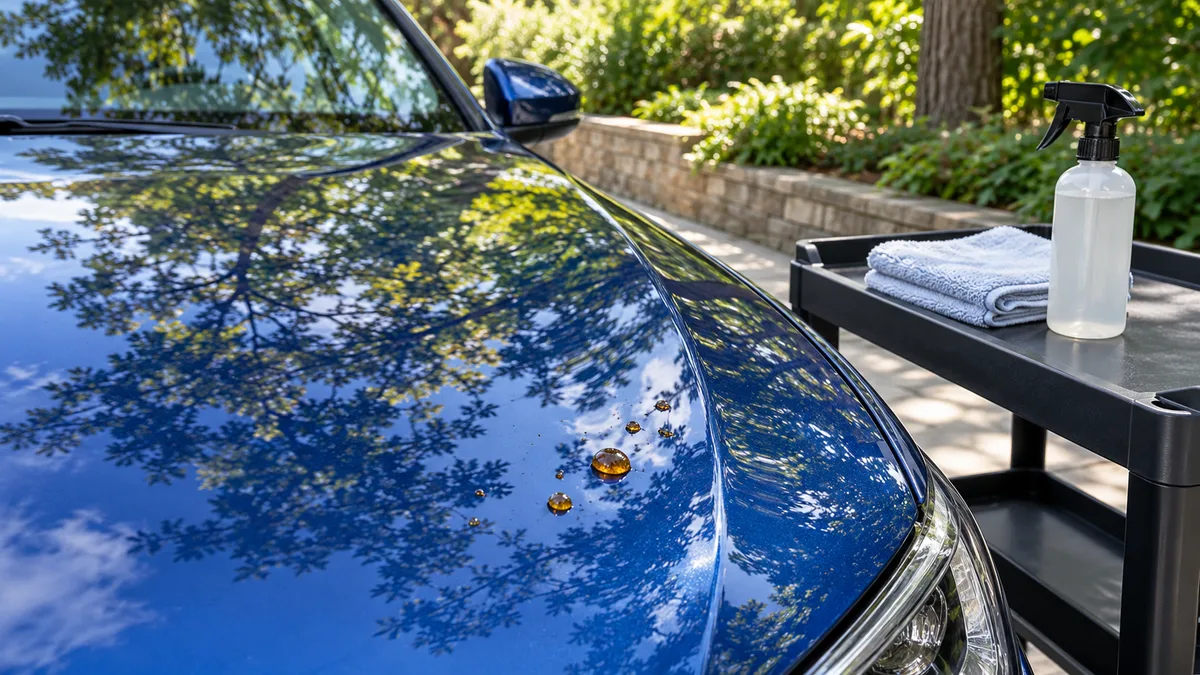
For tree sap on ceramic coating, start with the coating's approved wash, then use a confirmed-compatible spot treatment for deposits that remain. Avoid scraping or forceful rubbing. Check the exact remover, underlying surface and coating age before applying a solvent; a paint-safe claim does not establish approval for your coating.
If the coating was recently installed, contact the installer before chemical cleaning. Our curing-time guide explains why permission to drive or get the car wet is different from permission to wash it.
Is the sticky residue actually tree sap?
Photograph the affected panel before cleaning. Record whether you see isolated raised drops, a widespread sticky film or a mark that remains after the deposit is gone. Those observations help a detailer choose the next step, but they cannot identify the substance conclusively.
Sticky material beneath a tree can also be honeydew. Iowa State University Extension, in guidance reviewed in July 2026, describes this sugary excretion from aphids and soft scales accumulating on vehicles. That establishes another possible source; it does not mean every sticky car has an insect problem or needs a solvent.
Use the normal coated-car washing process first when the coating's care instructions permit it. Inspect what remains before buying a specialist cleaner. Do not turn a small deposit into a whole-car decontamination job by default.
Three manufacturer documents, different answers
We compared three selected manufacturer documents on October 29, 2026. We recorded the product version, explicit sap reference, coating statement and application limits. This is a document comparison, not a removal test or a measurement of coating durability.
| Document | What it establishes | What still needs checking |
|---|---|---|
| GYEON's September 2020 sap article | Names Q²M Tar for sap; describes a cleaned, damp surface, keeping the product from drying and a thorough rinse | Whether those older directions apply to the bottle sold today |
| Current Q²M Tar REDEFINED page | States suitability for coated surfaces and lists paint, glass and plastic trim | The page names tar, asphalt and organic road deposits, without an explicit sap reference or numbered dwell time in its use sequence |
| Stoner Tarminator page | Explicitly names tree sap; its use directions specify small painted exterior areas, cooling/rinsing first, 30–60 seconds and immediate rinsing | Approval for your ceramic coating; the paint and clear-coat statements alone do not supply it |
The practical finding is a documentation gap. One page can answer “does this remove sap?” while another answers “is this suitable for coated surfaces?” Neither question resolves every material on your car. An older article naming a product is also insufficient to establish the current version's complete instructions.
For the GYEON example, verify sap suitability and the full current application method against your bottle or with the manufacturer before proceeding. Do not fill the missing dwell time with Stoner's timing. Our tar-remover comparison covers broader coating and substrate differences if you are selecting a cleaner.
Make a panel-specific removal plan
Before treatment, write down the coating name, installation date and exposed surface. A coated hood may be bare painted bodywork, while the coated bumper beside it has PPF. Repainted areas, matte finishes and plastic parts need their own compatibility check.
Use this sequence to decide whether you have enough information to work:
- Confirm permission to clean. Check the coating's aftercare sheet, especially during curing. If it does not cover this contamination, ask the installer for a named product and method.
- Wash and inspect. Remove ordinary dirt through the approved routine. Keep a record of the deposits that survive it rather than rubbing them repeatedly with the wash mitt.
- Read the complete remover directions. Check wet or dry starting conditions, permitted surfaces, temperature limits, test-area instructions, working time and cleanup. Follow its protective-equipment instructions too.
- Treat a small area as directed. Keep the application within the permitted panel. A successful test does not override an express material exclusion.
- Complete removal and cleanup, then reassess. Repeat only as the product permits. If progress requires harder rubbing or an improvised chemical mixture, stop and ask for help.
Stoner's page illustrates why this check matters near a windshield or trim: its directions prohibit headlights and clear plastics, and its warnings also identify decals, adhesives and solvent-sensitive materials. The numbered directions set a one-minute limit without rinsing. Its separate FAQ suggests heavier buildup may need longer; follow the stricter stated limit and ask Stoner to resolve any ambiguity rather than extending contact yourself.
For a coated film panel, confirm approval for both layers. Our coating-over-PPF guide explains that combination. Do not infer film approval from a general claim about coated paint.
Stop when the deposit is gone but a mark remains
A remaining outline, haze or dull patch is a different problem from a raised sticky deposit. Further solvent application may not be the appropriate response. Photograph the cleaned area, record the product and contact time, and have the installer assess it before correction.
Do not automatically clay or polish the spot. Our clay-bar guide explains the checks before mechanical decontamination. Ask whether the proposed work would alter the coating and whether local reapplication would be needed.
Likewise, a change in water behavior after treatment does not establish how much coating remains. The not-beading guide separates cleaning and assessment from adding another maintenance layer. Keep the surface observable until the problem is understood.
What to ask a shop about sap removal
Send photos and the coating details, including any PPF or repaint. Ask which cleaner the shop proposes, why it suits those surfaces, what happens if a mark remains and whether the quote includes coating repair. A removal service and paint correction should have an agreed scope before work begins.
If sap repeatedly appears in the same parking space, changing the parking spot can reduce that exposure; GYEON's sap article specifically advises checking the parking environment. A coating is not a reason to leave deposits indefinitely. The compared documents establish no universal safe waiting period.
When comparing local detailing shops, look for a clear treatment plan and an explanation of where cleaning ends and corrective work begins.
Stay Updated with Ceramic Coating News
Get the latest updates on ceramic coating technology, tips, and exclusive offers delivered to your inbox.