
Iron Remover on Ceramic Coating
You can use an iron remover on ceramic coating when the named product is approved for your coating and the surfaces it will touch. Check the coating's aftercare rules, the cleaner's current label and nearby wheel or trim finishes first. Do not choose by pH alone or copy another product's dwell time.
For example, Gtechniq's W6 page says it does not damage coatings, yet explicitly excludes bare or anodised aluminium. Coating compatibility and material compatibility are separate checks.
What an iron remover is for
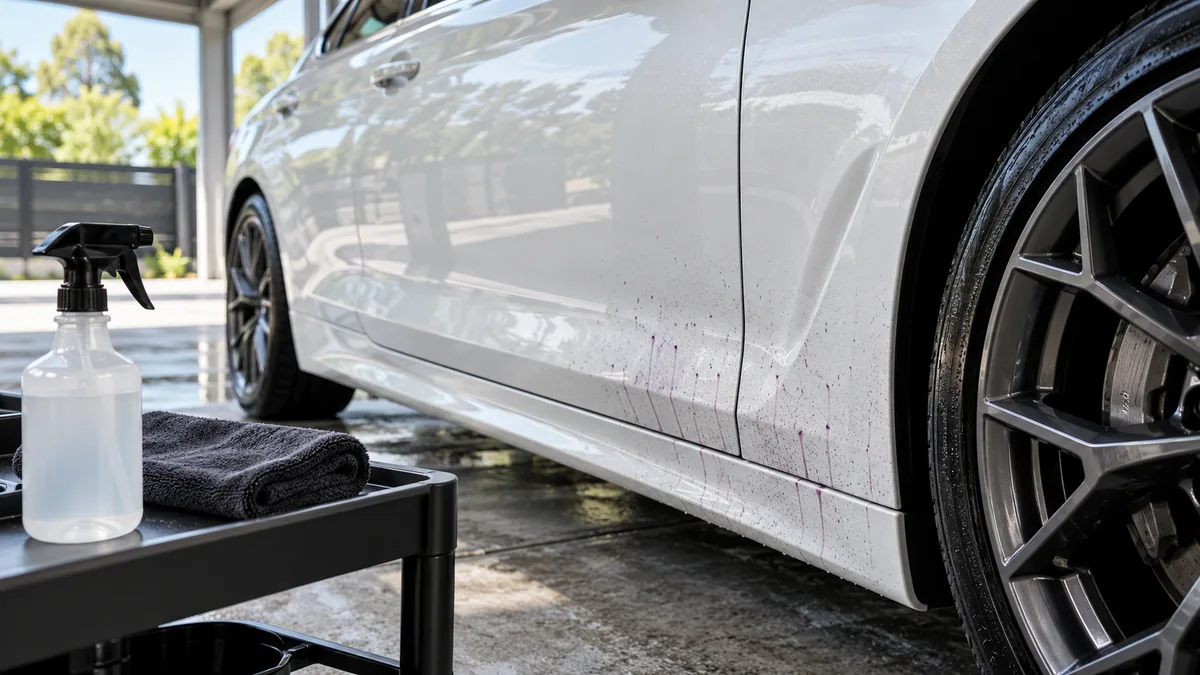
Iron-removing products target ferrous contamination, including brake dust and rail dust. CARPRO describes IronX as forming a water-soluble complex with iron particles so they can be rinsed away. Its instructions describe a purple-red reaction. That color is a reaction cue, not a measurement of coating thickness or remaining protection.
Start with an approved maintenance wash. If the remaining problem is sticky road tar, use the separate tar-remover guide; mineral rings belong in the water-spot guide. Do not assume every speck, stain or rough patch is iron, or keep spraying the same chemical when the deposit has not been identified.
Iron remover on ceramic coating: three instruction sets
We compared three current manufacturer product pages on October 23, 2026. We selected W6, Q²M Iron REDEFINED and IronX to compare their published surface claims, reaction times and contact instructions. This is a documentation comparison, not hands-on testing, a performance ranking or a guarantee for every coating.
| Product and primary source | Published surface guidance | Directions that change the job |
|---|---|---|
| Gtechniq W6 | Says it does not damage coatings; excludes bare or anodised aluminium. | Remove loose dirt first; dwell 3–5 minutes without drying; rinse. Agitation is suggested for heavy soiling. |
| GYEON Q²M Iron REDEFINED | Describes a neutral-pH remover for multiple exterior surfaces, including paint and wheels. | Apply to a cool surface, allow reaction, agitate lightly if needed and rinse thoroughly. Do not let it dry. This global page gives no numerical dwell time. |
| CARPRO IronX | Lists paint, plastic, chrome, glass and alloy wheels. | Wash first, shake, spray and wait 3–5 minutes. The sequence includes a damp soft sponge before rinsing and warns against drying in direct sunlight. |
The comparison exposes two decisions that a generic “spray, wait, rinse” recipe misses. First, the reviewed GYEON page leaves reaction time unnumbered; borrowing W6's timer would add an instruction that page does not give. Check your bottle or ask the manufacturer for the applicable version's directions.
Second, the contact steps differ. W6 and GYEON discuss agitation when needed, while IronX includes a sponge step in its published sequence. Choose a method permitted by both the cleaner and coating provider instead of treating every iron remover as a contact-free process.
The GYEON and CARPRO surface lists above do not, by themselves, establish approval for your particular coating, film, wrap or exposed metal. Our table records the pages' stated scope, including omissions; it does not extend those claims to unnamed materials.
Before treating a coated car
- Identify the installation. Find the coating name, application date, care sheet and any topper. For a fresh installation, resolve the curing restrictions before chemical decontamination.
- Confirm the exact cleaner. Check its current label, safety instructions and compatibility with the coating. A similarly named paste, shampoo or wheel cleaner may have a different process.
- Map adjacent surfaces. Identify wheel finishes, exposed metal, film and trim that spray or runoff could reach. W6's aluminium exclusion matters even when the painted panel itself is suitable. Our wheel-coating guide explains why the finish still needs its own assessment.
- Prepare the conditions and rinse. Follow the specified preparation, ventilation and protective-equipment requirements. Have rinsing water ready and work in sections you can monitor. Follow the product's cool-panel and sunlight restrictions; a timer is not permission to let a cleaner dry.
- Use the prescribed contact and finishing steps. Follow the chosen product's directions, rinse thoroughly and complete any required follow-up wash. If it begins drying before the stated reaction period ends, rinse rather than extending exposure to chase a stronger color.
If the coating and cleaner instructions conflict, pause and obtain a compatible method from the provider. Do not make an improvised stronger mixture or combine cleaners to resolve the conflict.
How often should you remove iron fallout?
There is no single interval in the reviewed guidance. GYEON's current FAQ ties treatment to contamination level. In a separate system-specific example, Glidecoat's maintenance guide includes its Iron Remover in an annual coating inspection and describes using it when iron buildup affects water behavior. That is Glidecoat's program, not an annual rule for every coated car.
The same Glidecoat guide specifies a 5–10 minute reaction period for its product, keeping it wet and rinsing thoroughly. That differs from the 3–5 minutes on W6 and IronX. It reinforces why a maintenance schedule and a dwell time must come from the relevant system rather than an average of other brands.
Use the coating's required inspections and the vehicle's actual condition to plan treatment. Record the affected panels and previous products so a shop can assess repeated contamination. Do not add iron remover to every wash merely because it is available.
When cleaning is not enough
After completing the approved process, inspect the panel before adding a booster. Our not-beading guide separates contamination checks from added water repellency. Improved beading after cleaning is an observation, not proof of years of coating life remaining.
If deposits, staining or roughness persist, have the surface assessed before moving to abrasive clay or polish. The clay-bar guide covers that decision separately. Stop if you see an unexpected finish change, and keep the product details and photos for the installer.
When booking a coating shop, ask which contamination it identified, which cleaner and method it proposes, whether adjacent finishes are compatible and what happens if marks remain. A quote should distinguish cleaning from correction or recoating instead of assuming a full replacement is necessary.
Stay Updated with Ceramic Coating News
Get the latest updates on ceramic coating technology, tips, and exclusive offers delivered to your inbox.